Intro to Competition
The clock changes everything. Get ready before your first match does.
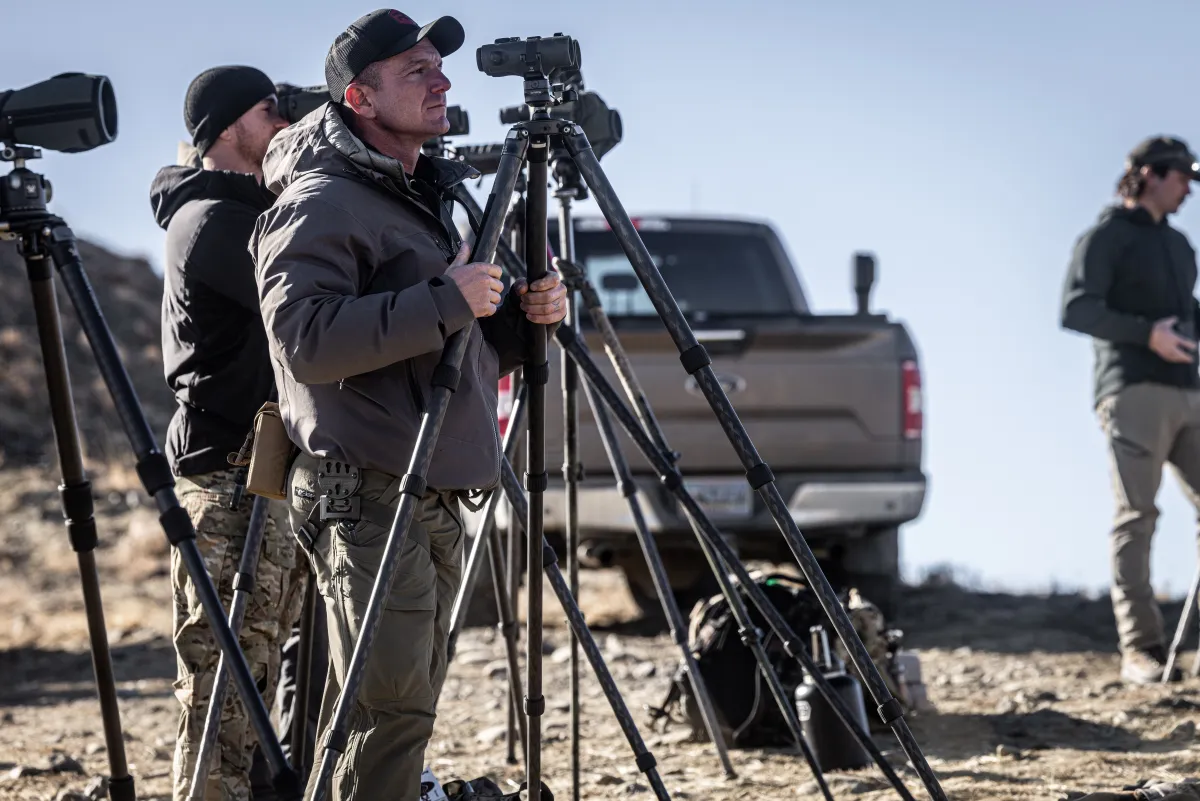
Solid fundamentals get you on paper. A shot timer, a barricade, and a wind you can't see get you humbled. Intro to Competition is our four-day jump from the flat range to the stage — PRS and NRL Hunter formats, positional shooting under time, and your first honest wind process. Built and taught by Marine Scout Sniper instructors, run like the matches you're training for. You leave able to plan a stage, shoot it on the clock, and debrief yourself.
- Level
- Level 1C — Foundation recommended
- Length
- 4 days, live fire
- You shoot
- PRS + NRL Hunter stages, KD & UKD
- Built for
- First-match-bound shooters
Fundamentals down. Match ahead.
Intro to Competition is for shooters with solid fundamentals who are ready to test themselves on the clock — Foundation graduates or anyone with the system down. We assume you've put in the work: you've watched our online Non-Live-Fire classes, you can run your rifle safely, and your mechanics hold up before the timer starts. This course takes that base and points it at a match.
You don't need any competition experience. What we're after is the jump most shooters make alone through trial and error — chasing gear instead of fixing the basics. We'd rather you show up to your first PRS or NRL Hunter match having already shot the formats, planned a stage, and called your own wind.
Four days, in match order.
We move from confirming your system, to getting off the bipod, to shooting the formats, to a mini-match — because that's the order a competitor's skills actually have to come together.
System check, then proof on paper
Day one we confirm the things that should already be dialed — system setup, 100-yard zero, chrono — then put your mechanics under a magnifying glass with the Cadre Pressure Test and our Modified 21 Dot Drill. From there it's ballistics into a solver and trajectory truing, finishing with a known-distance course of fire out to roughly 700 yards, run sniper-school style with an instructor on your gun.
Get off the bipod and into positions
A Body Break warm-up, then the Positional Triangle and real positional shooting — starting on paper at 100, then onto stages at intermediate distances. After lunch we start calling wind: building a process with a Kestrel, using Gun Number, and reverse-engineering corrections off your misses. The day ends partnered up as shooter and observer on known-distance troop lines.
Shoot the formats — plan, prep, execute, debrief
Warm up on the 21 Hex, then work three to five PRS stages and three to five NRL Hunter stages the way a match runs them: read the brief, build a plan, prep, shoot it on the clock, debrief. We close on the open range chasing down the friction points the stages exposed — the positions that broke, the transitions that cost you time.
Run a mini-match as a squad
Last day, you zero, chrono, and true so the rifle's honest going in. Then a mini-match — three PRS stages and three NRL stages — moved through as a squad, each shooter briefing and executing their own plan. After every stage you call your own three sustains and three improves. You leave with reps under pressure and a way to keep getting better.
The curriculum.
The formats, the stage craft, the positions, and the wind — plus the Cadre drills and the debrief habit that keeps you improving. Nothing here is theory for theory's sake; every block ends with you proving it on the clock.
Match Formats & Rules
- PRS: game-style positional shooting on the clock
- NRL Hunter: field-practical, unknown-distance shooting
- Stage briefs, time limits & round counts
- Scoring, divisions & how matches actually run
Stage Planning & Time
- Reading a stage brief and building a plan
- Sequencing positions and target order
- Prep time: mags, data, dry runs
- Managing the clock so you finish the stage
Positional Shooting
- The Positional Triangle for a stable build
- Barricades, props & improvised field positions
- Recoil management off-bipod and unsupported
- Holding a position when the timer is running
Calling Wind
- A repeatable wind process with a Kestrel
- Using Gun Number to bracket a call
- Reverse-engineering corrections off your misses
- Building an honest wind firing solution
Data & Observer Work
- Zero, chrono & truing your trajectory
- Programming and trusting a ballistic solver
- Spotting: reading trace, calling impacts
- Shooter / observer communication on the line
The Cadre Drills & Debrief
- The Pressure Test & Modified 21 Dot Drill
- The 21 Hex as a positional warm-up
- Three sustains, three improves after each stage
- Match logistics: what to pack, how to prep
Capabilities, not notes.
By the last stage of the mini-match, you'll have shot the formats, called your own wind, and debriefed your own performance. Here's what you'll be able to do on your own when you leave.
- Tell PRS and NRL Hunter apart and know how each match runs
- Read a stage brief and build a plan you can execute
- Shoot a stage under time without your position falling apart
- Build a stable shooting position off props and field positions
- Run a repeatable wind process and make an honest call
- Call your own shot and reverse-engineer a correction off a miss
- Manage your data and dope through a course of fire
- Spot for a partner — read trace, call impacts, communicate the fix
- Program and actually trust a modern ballistic solver
- Debrief yourself with three sustains and three improves
What to bring.
A precision rifle capable of under 1 MOA with a rough 100-yd zero, a precision optic with a level, bipod, rear bag, and a ballistic solver (Hornady 4DOF is free). Bring enough magazines and 400 rounds of match-grade ammo to feed the stage round counts — competition burns rounds faster than a flat range. A Kestrel or wind meter is recommended. A full gear list — required, recommended, and personal sustainment — is sent the moment you register.
Taught by former Marine Scout Sniper instructors — guys who've competed at every level and shoot the stage in front of you before they ask you to. No has-beens, no gimmicks. Just what works under the clock, proven on the range.
Ready to shoot your first match?
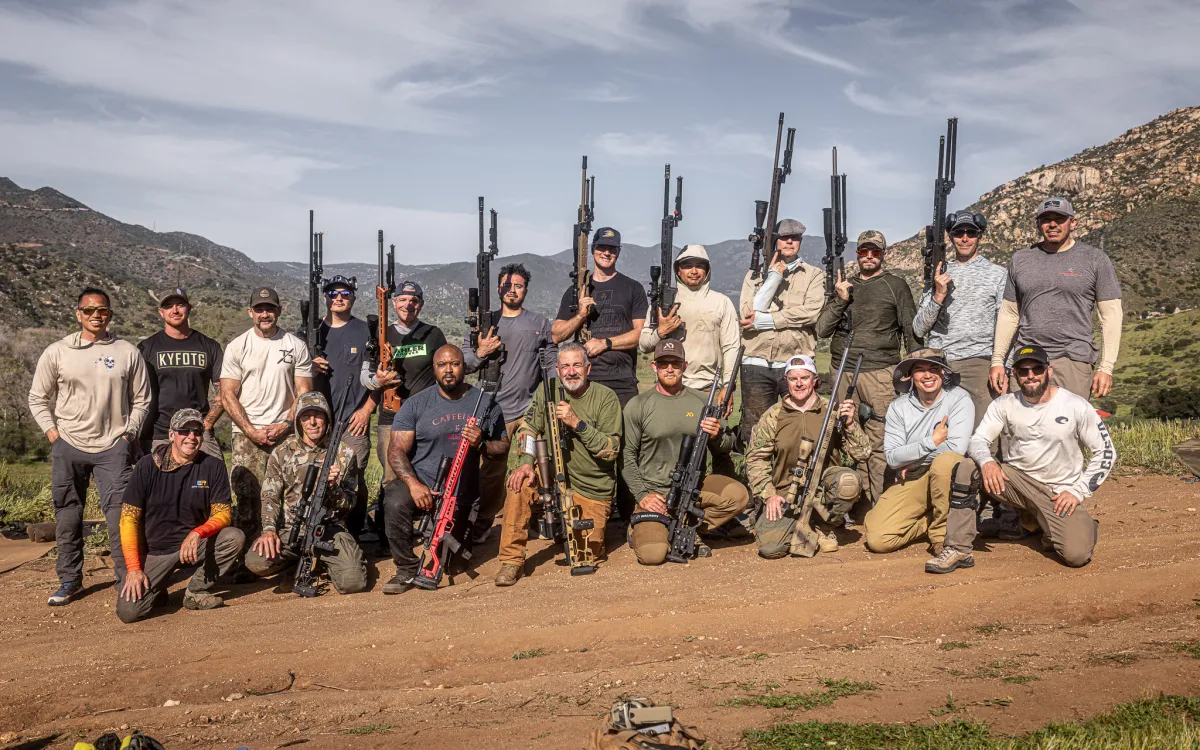
Intro to Competition runs in Alaska, Texas, and North Carolina through the year. Find the date that works and lock your spot — classes are small and fill fast.