What Jon's running at Snake River Pro/Am 2026. NRL Hunter Build.
A 6.5 Creedmoor put together for NRL Hunter — modular enough to teach with, configurable enough to travel with, and trimmed to live inside the 16-pound teams cap. Here's every component on this rifle and why it's there.
Built in 2023 or 2024, refined since. About to change again — Redbeard Gunworks is finishing a new configuration for the upcoming NRL Hunter teams season with Phil.
- Published
- February 13, 2026
- Runtime
- 19:28
- Views
- 8,464
- Instructor
- Jon Bumpus
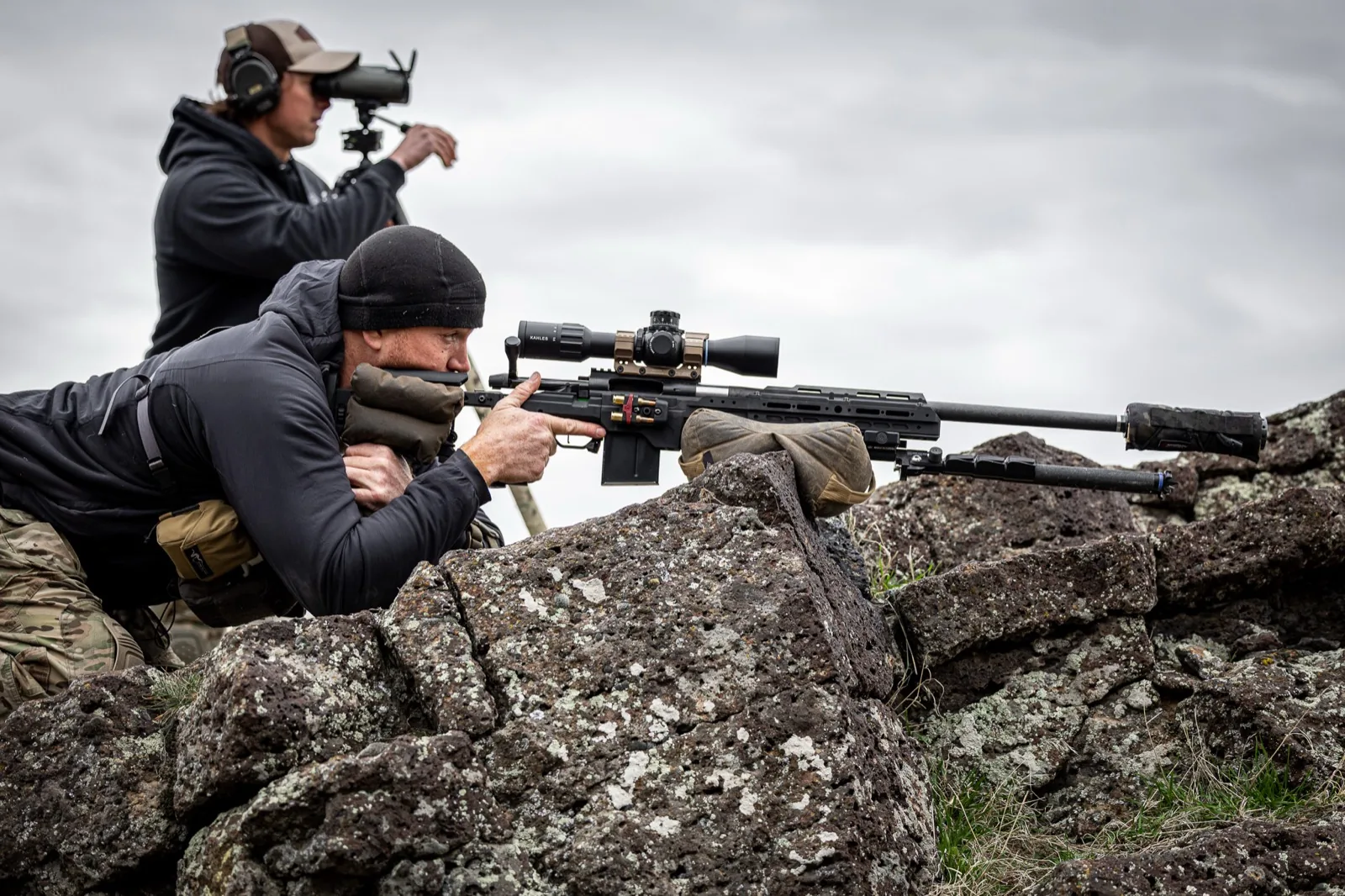
A Rifle That Has to Do Three Jobs.
Jon's PRS rig is a 25-pound, purpose-built 6 Dasher in a KRG C4. He loves it. He also doesn't carry it up a mountain. This rifle is the other half of the answer — and the way it got designed says a lot about how Jon thinks about rifles in general.
The constraints were stacked up before any part went on the order sheet. The rifle has to cover three contexts — his primary line of work, the teaching he does at The Cadre, and the NRL Hunter matches he competes in — without rebuilding the platform between them. That means one chassis, one set of ergonomics, one trigger reach. It also has to live inside the 16-pound cap that NRL Hunter teams and open heavy run on, which means every gram of comfort gets paid for somewhere else.
So the build order isn't accidental. The action came first because the action is the anchor. The barrel came next because weight savings up front buys you everywhere else. Then the platform got built around the two of them. Walk through it with me.
The Whole Rifle, at a Glance.
If you want to skip the prose and just see what's bolted on, here's the parts list. Each piece gets a deeper read below.
Everything Has to Fit Under 16 Pounds.
The weight cap is the whole reason this build looks the way it does. Jon never puts a total weight on the rifle on camera, so there's no tally here — just the budget, and which calls bought room versus spent it.
Jon never states the rifle’s total weight or any single part’s weight on camera.
- Carbon barrel Proof carbon-wrap sheds weight up front so heavier parts can stay on and still make the cap.
- Whiskey-3 Pro chassis Same C4 ergonomics in a lighter package — the reason Jon can run it in NRL Hunter at all.
- OEM CKYE-POD Triple-pull kept stock — no fat trimmer, no carbon legs — and still made weight.
- KGM R30 can A can adds ounces at the muzzle; the light front end is what lets it ride along in spec.
Every Component, Explained.
Eight parts, three acts. Each one with the reason it's on the rifle, the tradeoff Jon accepted to put it there, and a jump to the spot in the video where he talks about it.
The Barreled Action
The action is the anchor. Pick it first, because everything else gets built around it. Once the action's set, the barrel is where you buy yourself room to breathe on weight — and weight is the whole conversation on a Hunter gun. Get these two right and the rest of the rifle is a series of smaller arguments.
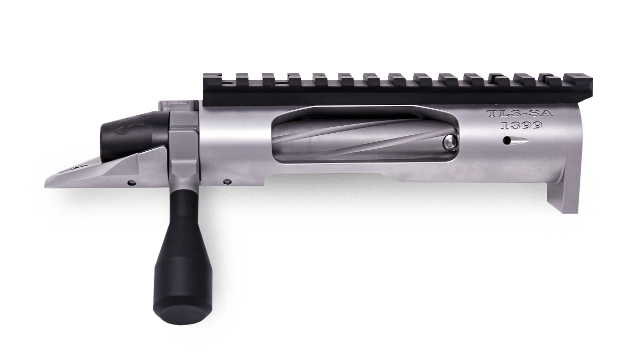
- Zermatt TL3
- Swappable bolt face
- Integrated recoil lug
- ~$1,100
Zermatt Arms TL3 Action
Affordable, reliable, and modular enough to chase different cartridges.
Around $1,100, picked up two or three years ago. The TL3 has been the through-line of this build since day one — same action, same recoil lug, same bolt body. Jon wanted something that accepted prefits and let him swap bolt faces between cartridges without buying a second action. Two-plus years in, that's exactly what it's done.
It runs smooth. It's been reliable. The integrated recoil lug means one less thing on the spec sheet to worry about. For the money — somewhere around $1,100 when he bought it — it punches above its weight for a rifle that isn't trying to be a single-purpose match gun.
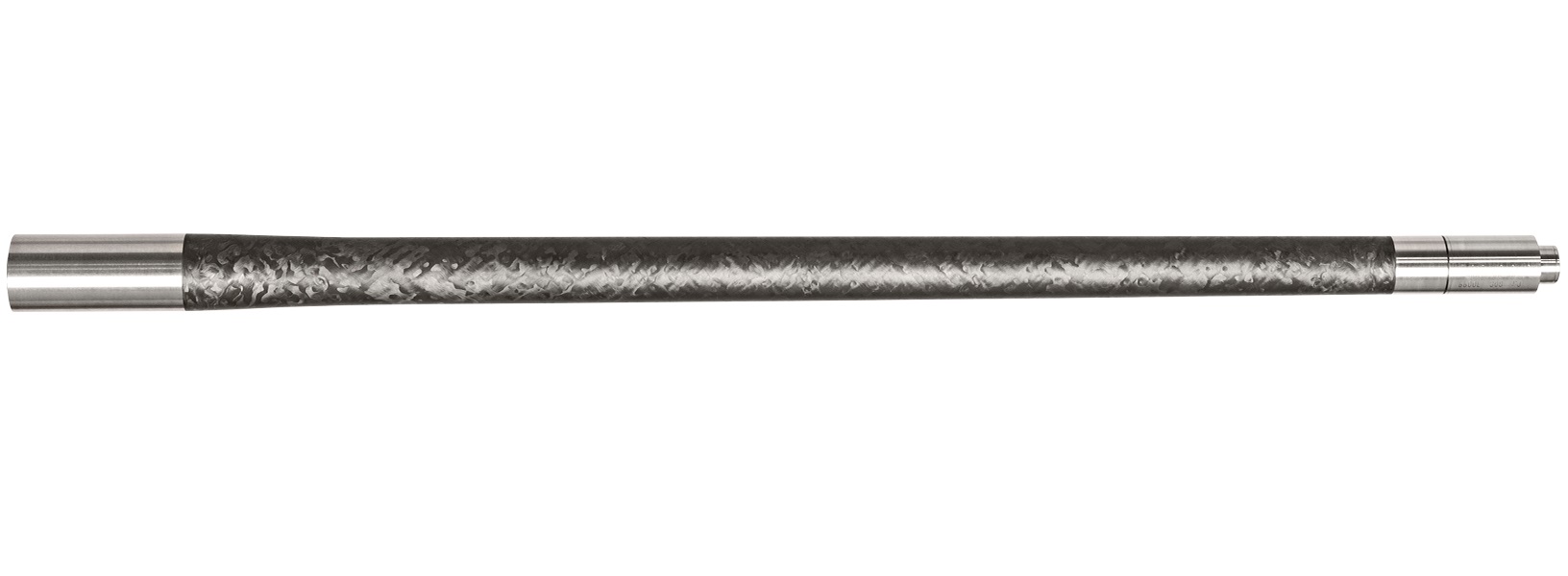
- Proof carbon prefit
- 24" · 1:8 twist
- 6.5 Creedmoor
- ~1,600 rds
Proof Research Carbon Fiber Barrel
24-inch, 1:8 twist, 6.5 Creedmoor — chambered prefit.
Just shy of 1,600 rounds. Same barrel since the build came together — about two years on it now. 24 inches, 1:8 twist, the typical Proof prefit go-to — and the single biggest reason the front end is light enough to absorb a suppressor and a triple-pull bipod without busting the 16-pound cap.
You'll hear that carbon-wrap barrels walk after five, six, seven rounds on a string. Jon hasn't seen it. He ran this same barrel up at Brian Morgan's Hat Creek last year on higher-round-count strings and shots didn't open up on him. That doesn't mean it can't happen on yours. It means it hasn't happened on his.
Driving It
With the barreled action set, the next four pieces are about how you actually run the rifle — what you hold, what you look through, what's keeping the gun honest, and what's coming off the muzzle. These are the parts that have to work across teaching, work-line stuff, and matches without being reconfigured every time. Jon's running one set that has to do all three.
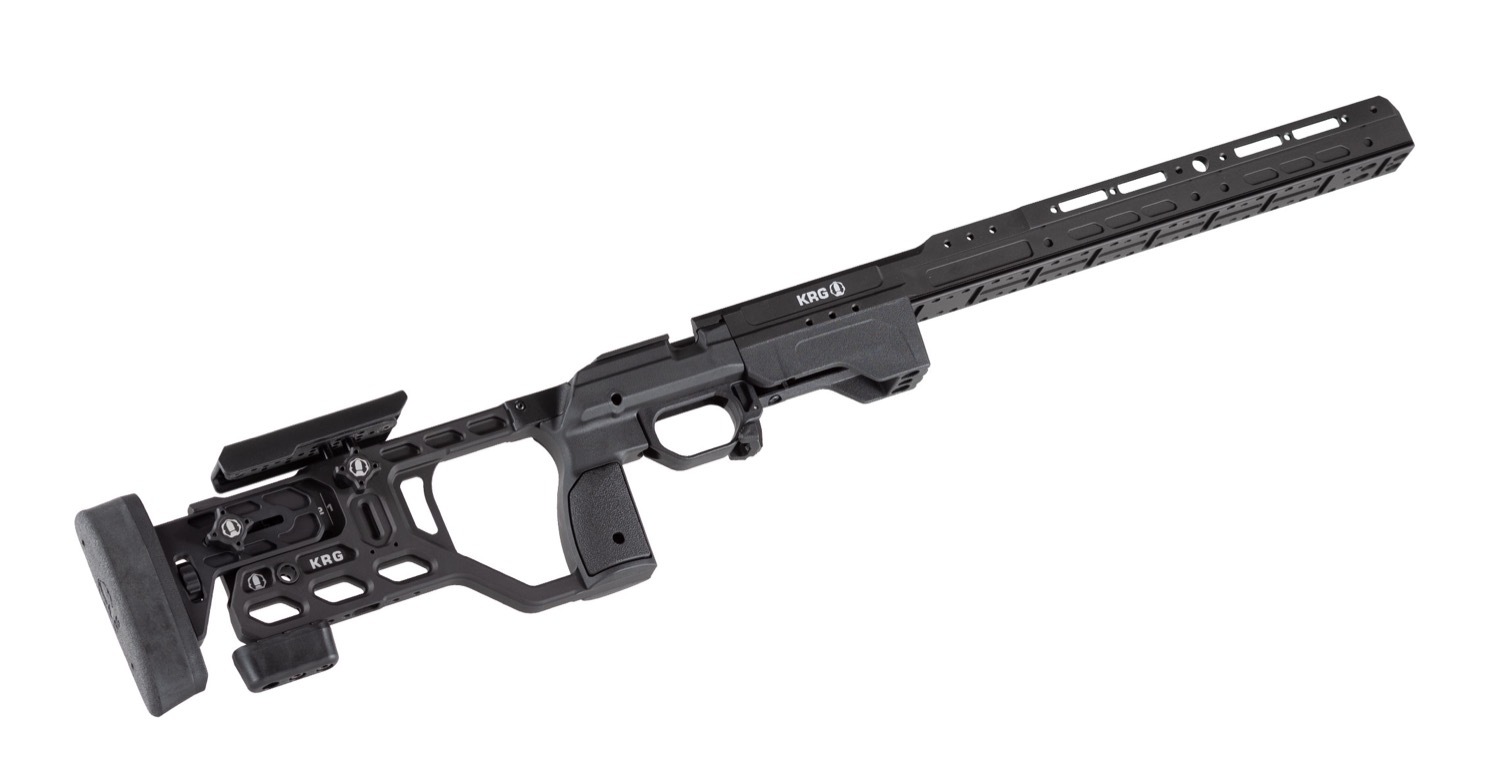
- KRG Whiskey-3 Pro
- Folder
- Full-length ARCA
- Toolless adj.
KRG Whiskey-3 Pro Chassis
The C4's ergonomics in a configuration light enough to carry up a mountain.
Jon shoots KRG because Phil put him onto them. “I started shooting KRG chassis because Phil highly recommended them,” and it was apparent the second one was in his hands — nothing but excellent, great customer service, great people to work with. That's the through-line behind the whole platform.
This rifle started life in a KRG X-Ray and moved into the Whiskey-3 Pro for one reason: the ergonomics map almost exactly to the C4 Jon shoots in PRS. Same hand feel, same trigger reach. The fewer things that change when the use case changes, the less he has to relearn between matches.
Toolless cheek riser, comb height, butt-pad height, length of pull. That matters in two places. One, on the line — when something feels off, he can fix it without breaking out a screwdriver. Two, at a class — he can show a student what an incorrect LOP feels like, or what it feels like when the comb is jammed so high you're slamming your face into the butt pad, without disassembling anything to demo it.
The folder shrinks the airline case. The full-length ARCA on the forend means he drops the rifle on an Anvil 30, or any other ball head, without hunting for a sweet spot. Bipods slide. Nothing has to come unmounted to reconfigure the gun for the next stage.
- KAHLES K328i
- SKMR4+ reticle
- 2026 refined
- Phil's glass
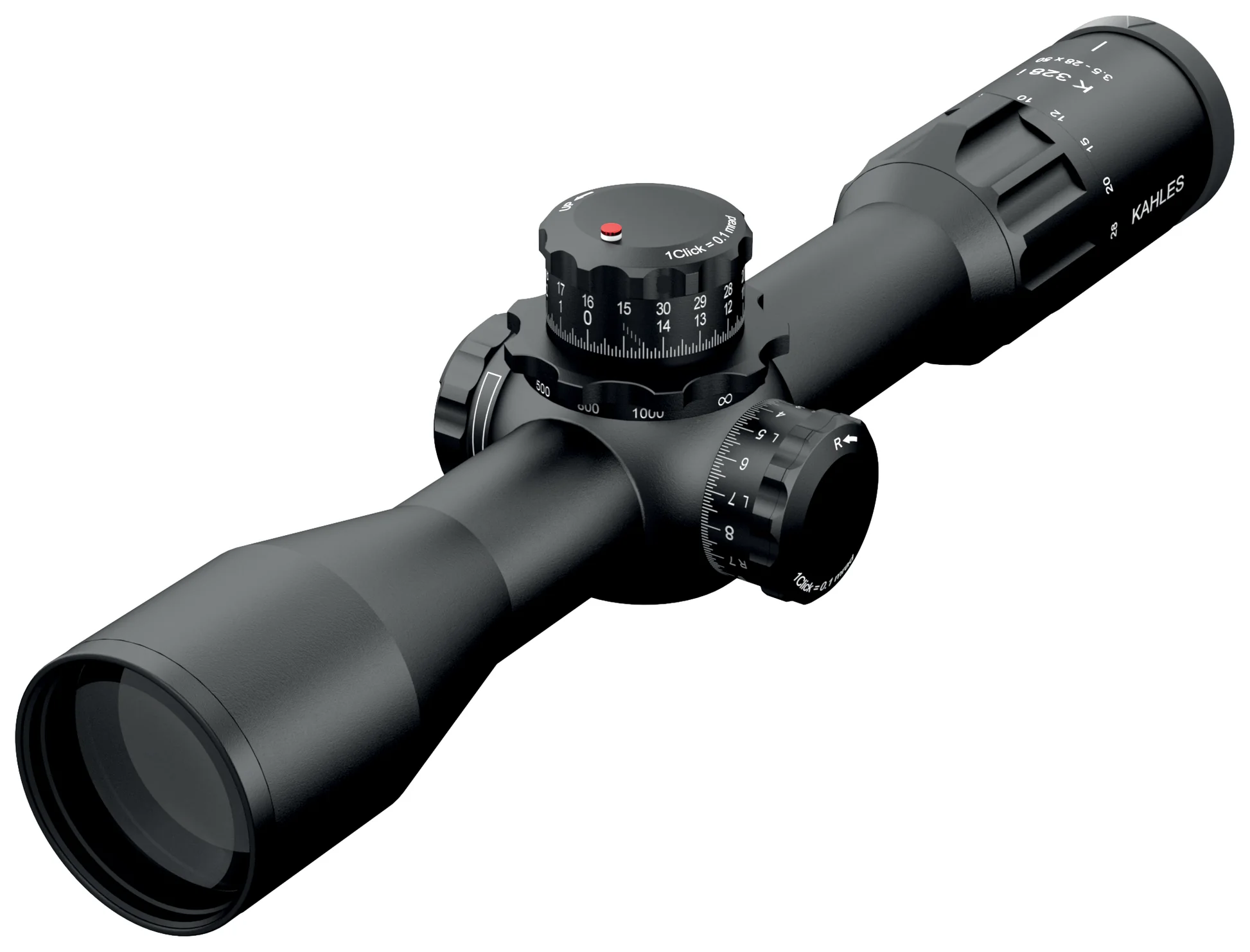
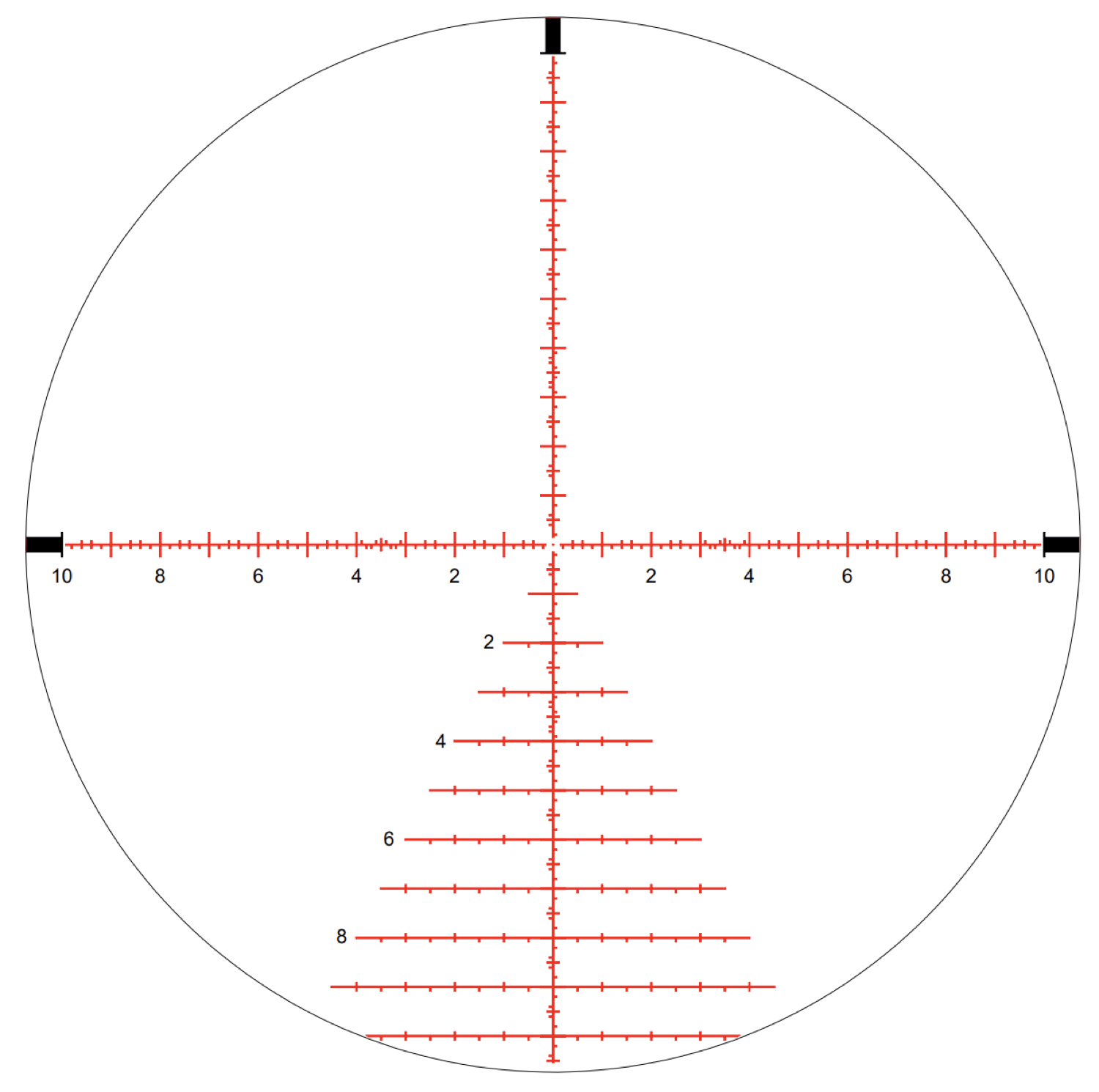
KAHLES K328i — SKMR4+ Reticle
The 2026 refined model, borrowed from Phil for this match.
Borrowed from Phil for the match. Jon's been running the K525i on his PRS rifle for a couple of years, so jumping to a 328 with the same reticle family is a known quantity — he isn't relearning the tree under pressure. KAHLES refined the 2026 line based on shooter feedback; Phil's breakdown video covers exactly what they changed.
The SKMR4+ does the thing Jon wants a competition reticle to do: hold when you want them, get out of the way when you don't. A lot of the over-built reticles on the market feel cluttered the moment a target gets small. This one stays readable when the steel does.
One note for replicators: Jon doesn't call out the magnification range, tube diameter, or focal plane on camera, so those aren't listed here — pull them off the spec sheet before you order.
- Badger Condition One
- Diving board
- Flatline Ops Halo X
- Fast-settle level
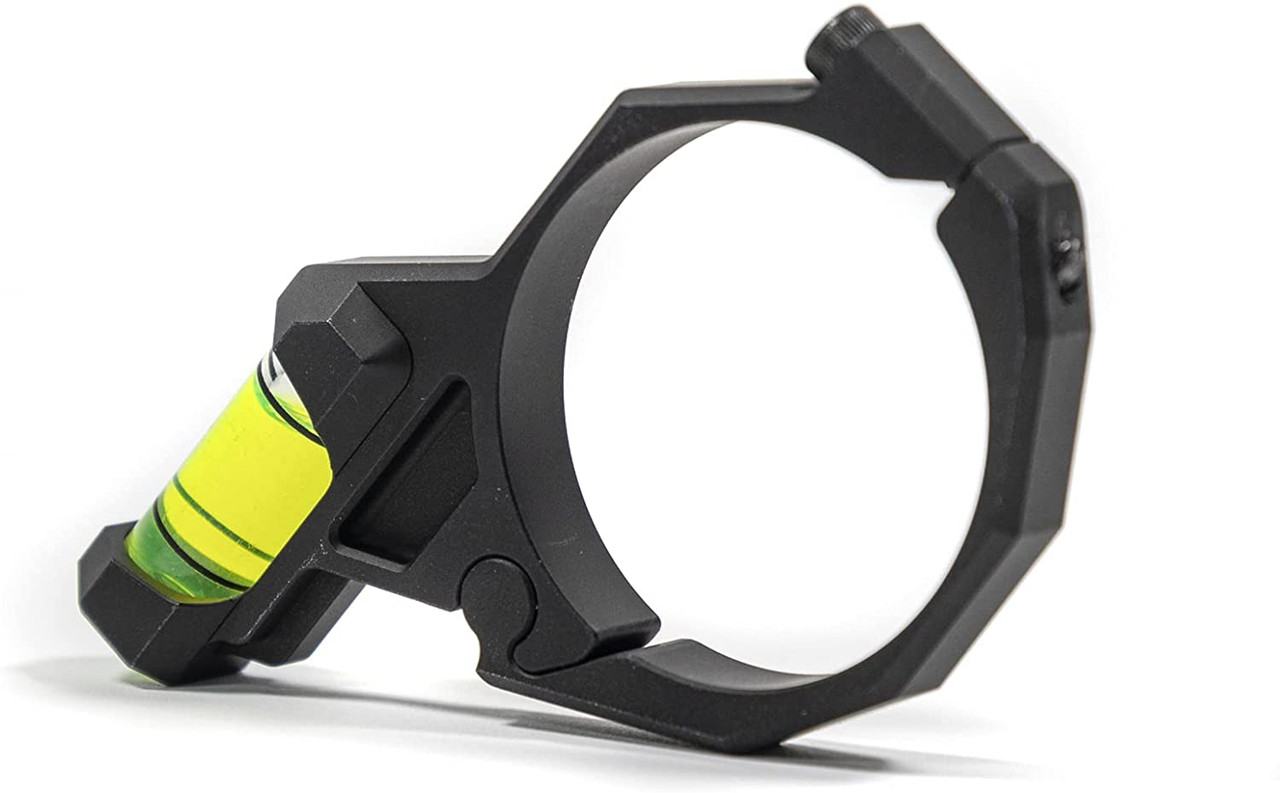
Badger Condition One + Flatline Ops Halo X
Diving board mount for optionality. A level that settles instead of hunting.
The Badger Condition One carries a diving board out front. Jon isn't running a weapon-mounted laser RF — a Fire 4000, a Mars, that kind of unit — on this match. He and Greg are spotting and ranging as a team. The board is there so when the rifle comes back to solo work, a unit can bolt on without a re-zero. Optionality, paid for once.
The Halo X has been on Jon's rifle for a few years and the reason is simple: when you adjust your cant, it settles fast. It doesn't keep moving after you stop the gun. He's used levels that were slow to correct — they tempt you into overcorrecting because you can't read where the bubble actually wants to live. That's a habit you don't want to build.
- KGM R30
- No brake
- ~6–7 months on it
- 6.5 CM / .308
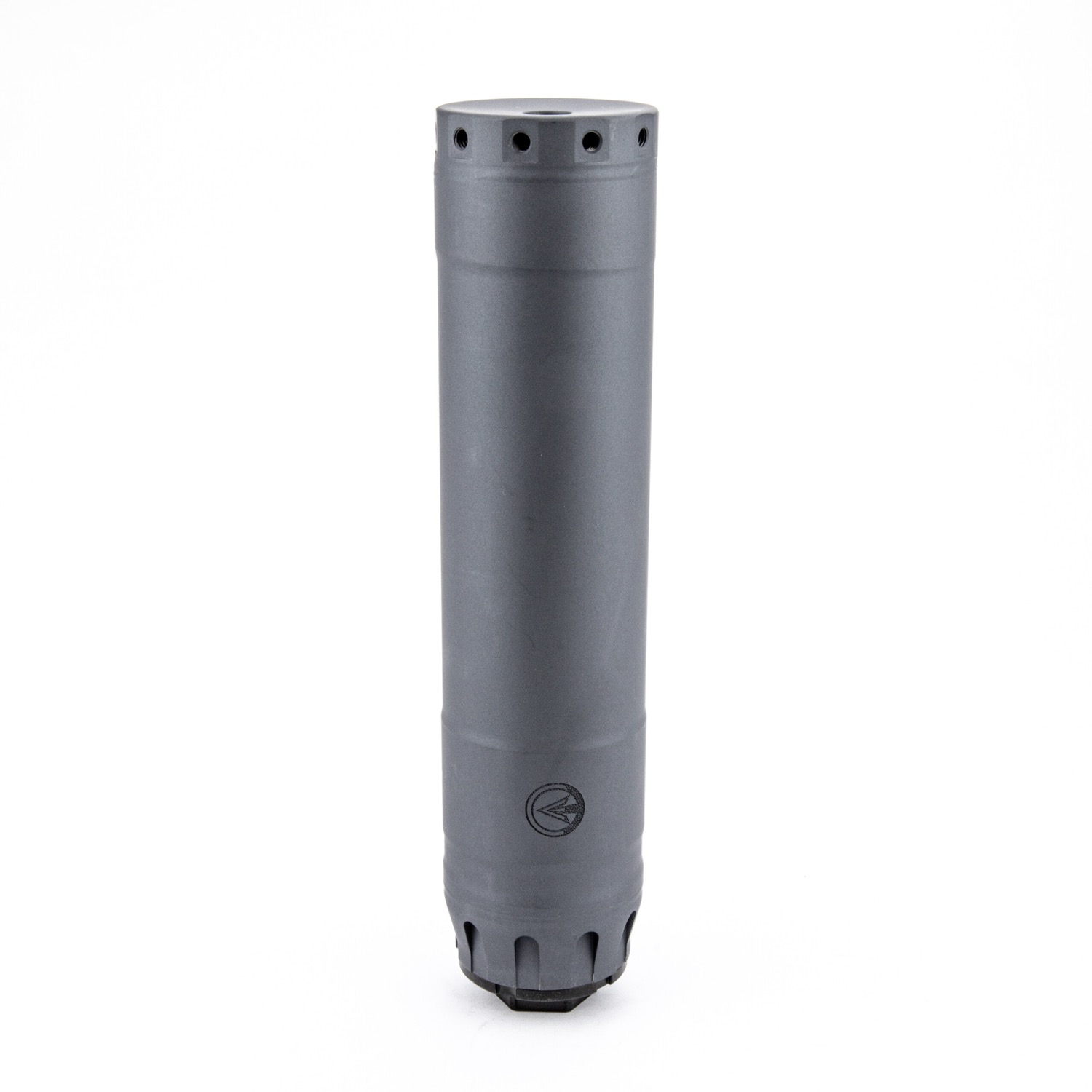
KGM R30 Suppressor
"I'll never go back to a muzzle brake."
Jon picked up the R30 not long after moving to Texas. Six or seven months in, the comparison is settled. He'll never go back to a muzzle brake.
There's no brake on the end of it, so it isn't doing what a hybrid does for recoil reduction. Doesn't matter. Even in a lighter NRL Hunter configuration, on a 6.5 Creedmoor or a .308 — anything with a little more recoil than your typical 6mm — the impulse stays manageable. What he keeps coming back to is what the can buys around the recoil number: with a can, you can talk to your spotter. Your partner doesn't flinch every time you break the shot. You're not married to earpro all day.
Jon doesn't run earpro under the can in open terrain. He'll put it back in if he's shooting somewhere with an overhang and it actually gets loud. Read the room — and check your local laws.
Jon doesn't state the can's length, weight, or caliber rating on camera, so those aren't listed here — confirm them against KGM's spec sheet before you build to weight.
Match-Day Support
The last two pieces are the ones every stage runs through — the bipod that has to catch whatever angle the terrain throws at you, and the load that has to put a round on a small steel plate at an unknown distance and not miss. Get these wrong and the rest of the rifle doesn't save you.
- MDT CKYE-POD
- Gen 2 triple-pull
- OEM legs
- In-spec @ 16 lb
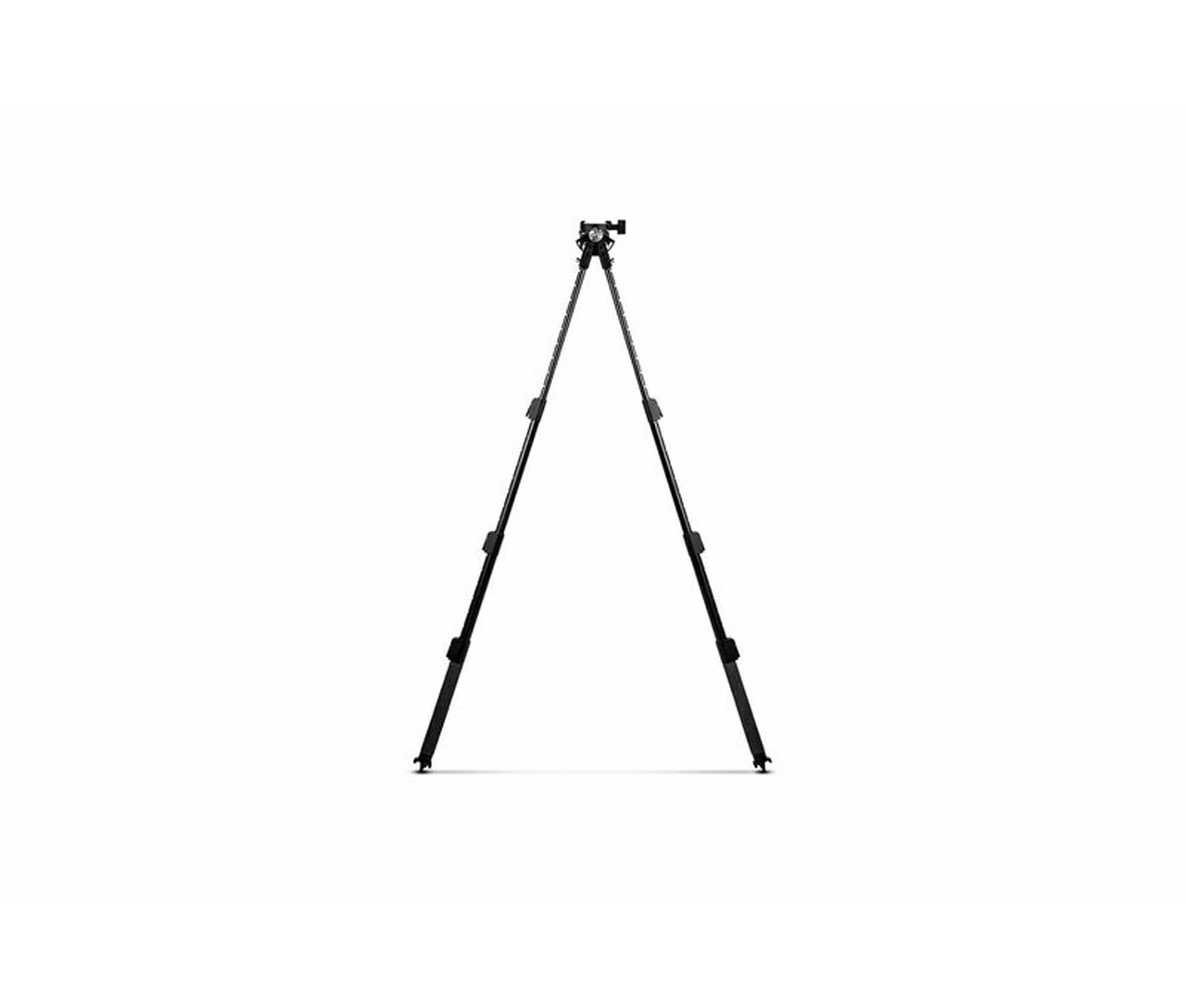
MDT CKYE-POD — Gen 2 Triple-Pull
OEM configuration. No fat trimmer, no carbon legs.
Second NRL Hunter match running the triple-pull. Jon set this rifle up to make weight with the CKYE-POD in its OEM configuration — no fat trimmer, no carbon legs, nothing trimmed off the bipod to keep the whole package under the 16-pound cap.
Hunter terrain throws curveballs. Stages get built around rocks, prop edges, awkward bipod-to-ground distances you can't always plan for. Jon enjoys natural terrain that forces you to figure things out on the clock — and triple-pulls are the right tool when you don't know in advance how tall you need to be.
- 147 ELD-M
- Lapua brass
- H4350
- ~2,753 fps
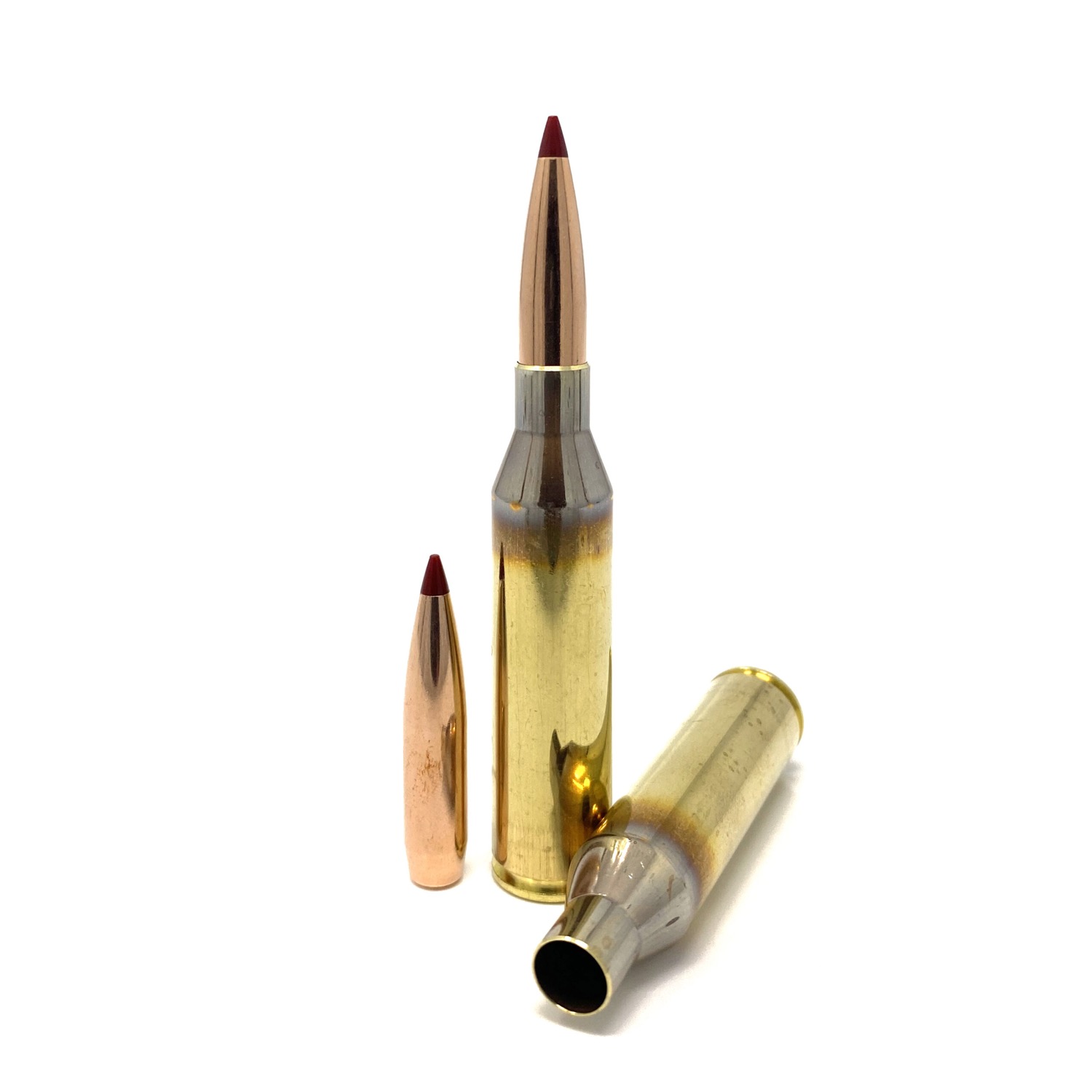
Hornady 147 ELD-M Handload
Lapua brass, H4350, sitting around 2,753 fps.
147 ELD-M projectiles in Lapua brass over H4350. Jon runs it right around 2,750 — “2753 is usually where I'm sitting.” The groups are honest, the SD and ES numbers are clean off the chrono, and he shot it last week at a one-day NRL Hunter Games as a tune-up — no elevation surprises across the whole day.
This is the load that goes into the match. If anything is going to change between now and the next build, it's the platform around the load — not the load itself.
Buy once, cry once — but we also completely understand this stuff can get expensive. Do your homework before you pull the trigger.
Bring Your Rifle. We'll Help You Build the Rest.
Knowing what's on the rifle is one piece. Knowing how to drive it under match pressure is the other. Come to a Cadre course and put rounds against steel with the same crew running this build at matches.