NRL Hunter Mason Valley debrief
Sustains, improves, and hard lessons
Day one in the books — twelve stages of NRL Hunter, borrowed suppressors, a stage that broke composure, and a long conversation about where your focus actually lives when you're behind the gun.
- Recorded
- March 20, 2026
- Runtime
- 1:30:08
- Venue
- Mason Valley, CA
- Stages shot
- 12 of 18
On the mic
Day one debrief
At the truck, after sundown
Day one wrapped at sundown. Twelve stages, eight of them in dead air, then the wind finally showed up like it knew it was being talked about. Phil, Jon, and Eric dropped the tailgate at the truck and ran the after-action they run after every match — three sustains, three improves, names attached. The recorder caught it. This is what came out.
Before any of that — a quick look at what the day actually was.
Venue
Mason Valley, CA
Different than last year — same place, same designers, but stage logic kept the squad on its toes.
Wind character
Consistently inconsistent
Eight stages of nothing, then a slow build into a headwind for the final three. Last year they saw gusts upwards of 50–55 mph — this year they lucked out. Last year was also ~45°F and rainy; today peaked near 90°F.
Stages shot
12 of 18
No freebies. Either positionally challenging or target acquisition was the gate. Nothing felt like a throwaway.
Equipment swap
Abel Co. cans replacing Thunder Beast
Sergeon lent the team Abel Co. cans. The crew runs Thunder Beast Ultras with brakes normally. "I will never go back to a bare muzzle."
Stages on the board
- Minotaur Stage one — tree position
- Tank trap Two sasquatches / werewolves
- Prairie dog Hidden target under the "O" placard
- Van / pig Fence-post ranging, ~410–710 yd
- Tank drive Stage 10 — wind reversed on Jon
- Elk 815 yd, held ~6/10 for ~5 mph
- Sasquatch The true zero-hold call
- Alien / placard Phil's favorite of the day
After-action
Three sustains. Three improves.
All three shot. Phil ran spotter for the squad most of the day and called his own corrections on the stages he was up. The format below is the one the squad uses after every match — public, on the record, names attached. Not because it sounds humble. Because the only way to compound the lesson is to write it down where someone can hold you to it.
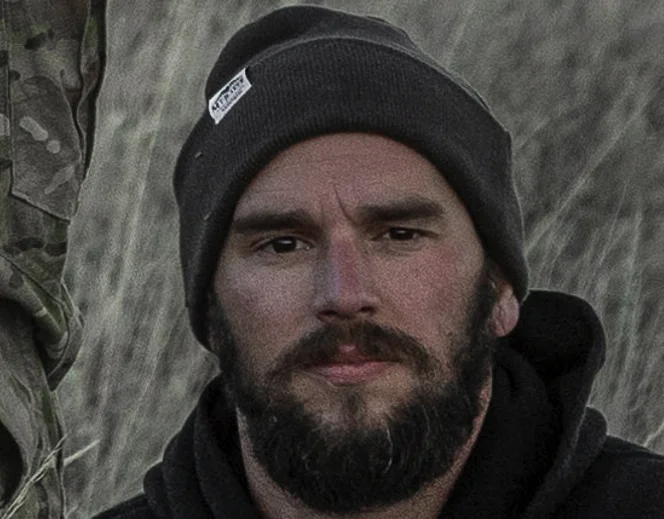 Eric D'Oro Shooter
@ej_doroSustains
Recoil management
Clipped into the tripod standing, especially with the brace from the January knee break. The Cindero in a Whiskey-3 Pro balances clean off the tripod.
Wind calls
Eight or nine stages of zero wind, then it started building right before lunch. Calls were dialed in by the time it actually mattered.
Composure (mostly)
Even keel most of the day — a one or a two on a stage and roll on. Lost some of it toward the end. Tired, cranky, couldn't find that third target on the last stage.
Improves
Don't get flustered
"It just doesn't matter. It's just shooting. We're here to train."
Bino-to-scope handoff
Found the targets in his glass on the first stage, lost them by the time he was behind the rifle. The TRP didn't survive the walk. Fix: burn the image in with the binos, hold it naked-eye, walk to the gun, snap into the scope on a picture you already have.
Confirm the target before you send
On the van/pig stage he shot target four thinking it was target two — got out of order because he never confirmed which target he was on. NRL Hunter lets you ask the RO yes/no questions; use them to lock the target down early instead of guessing.
Time management
Asked for a check around what felt like the two-minute mark and got "you have 55 seconds left." Most of the day's lost points came from timing out hunting blind, not from double misses.
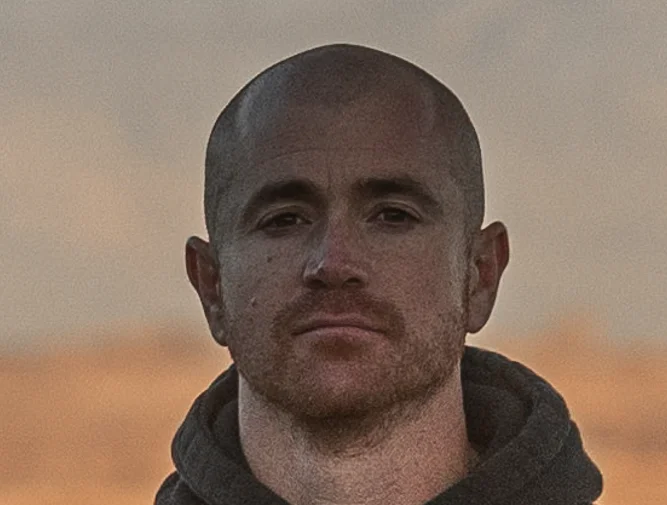 Jon Bumpus Shooter
@thecadre.jonSustains
Recoil management
Stayed on the target. Saw impacts on every stage. No coming-off-the-rifle moments.
Process & workflow
Turrets zeroed, mags loaded, gear staged. Few small hiccups, but the systematic steps were there.
Team communication
Push-and-pull was clean. No waiting on info, no information that didn't need to be given. First time competing as a squad since Gunworks 2024.
Improves
Build the trigger cam into the flow
Missed turning it on a few stages. New step takes reps before it lives in the subconscious.
Stay in the moment
Held wind the wrong direction on the tank drive (stage 10) — kept thinking about the earlier left-to-right when it had switched to steady right-to-left. The second he sent it he knew: "You're an idiot." Phil started second-guessing his own (correct) call, and Jon owned it on the spot: "Nope, that was me." Second shot lined up.
Run your postfire checks
On the wolf/vitals stage he skipped his postfire checks and left the dope at 1.9 from the wolf stage instead of scrolling to 0.9. First shot wasn't even on the body. Then he got flustered and pulled the second into the body instead of the vitals. Stick to the process — the checks exist so the dope is never a guess.
Don't get married to a position
Committed to bipods + tripod rear when a tripod clip-in would've been faster and more stable. Don't feel like you have to fight through it.
 Phillip Velayo Shooter & spotter
@velayo_0317Sustains
Clutch corrections (rule of threes)
No reticle on the corrections — just splash and target size. The math he runs in his head: 1 MOA is about 3/10 of a mil, and most animal targets are a mil or a minute-and-a-half tall, which works out to 4 or 5/10. Snapshot the vertical gap ("that's about a target and a half low"), call it bold, and bias the hold 4/10 above the back to buy buffer.
Moving target — first-round impact
Pulled the Kestrel for the lead, then timed the mover off the NightForce spotter. Not a 5ms split — he ran the stopwatch timer and got 30ms because it was moving so fast, which put the target at 4 mph. Sent it on the first round. "John Wick moment."
Initial wind calls with Gun Number
When the squad missed, they typically missed by over-holding wind, not under-holding. Calls were honest about the shift to a headwind on the last three stages.
Improves
Better talk-ons to Jon
Everything looks the same in this terrain. Reference rock bands and groups of rocks, not cardinal directions — once you and your shooter are off-axis even a few feet, his 12 o'clock isn't your 12 o'clock.
Pull the shooter onto your glass
On the prairie dog stage with the placard call, the moment the words weren't landing the right move was, "come look through my scope." It took thirty seconds to think of.
Quantifiable corrections (when it matters)
Got called out on YouTube for saying "off to the left, you're a little high" instead of measuring against the target — "point X from top-left, hold half-width. You've got one job." Fair push-back. His read: he kept the calls soft on purpose so Jon "doesn't lose faith in his system" when "a little low probably means you're still on the plate," inside the rifle's cone of accuracy. The context calls for both — chemistry shorthand for a trusted shooter, quantifiable corrections when it matters or when teaching.
Squad etiquette: keep your mouth shut
He's watched it in PRS squads — everyone on glass in the back miscalls splash off the dust plume, the shooter hears "he's high," starts cranking the elevation turret, and now they're hitting low when nothing was wrong. A miscalled splash makes other shooters dial wrong. If it isn't your shooter, keep it to yourself.
If you could throw a pitch that no one could hit, would you change it?
Hard lesson · 13:30
The elk stage and the camera that doesn't lie
The elk sat at 815 yards — four positions, one target. Eric's Garmin had been reading high all day (it died at Snake River; Phil got it working again), so he had a pattern in his head. First shot, a tiny splash he couldn't read clean. Going on the pattern, he called it high and corrected down. Behind the gun he was sure the next one went high again, so he dialed down another 3/10, switched positions, and connected. Next position, next round — now it sailed way off, over the elk's back. Nothing added up.
Then he watched the footage. The splash he'd read as high on that second shot was low on the trigger cam. Jon saw it low too. He'd dialed the wrong way off a read his own eyes invented. His verdict was blunt: "It's not my handloads, it's not my zero. I'm just bad at shooting — I had a bad micro-second, should've broken that shot a tenth of a second later."
That is the whole case for the trigger cam in one stage. The only thing Phil wants out of it is the answer to a single question: was I seeing what I think I saw in the moment? The camera settles it after the fact. The catch is that it's a new step in a tight process — which is why everyone on the squad spent the day reminding each other to turn the thing on. Add the kit, then train the kit in until it disappears into the workflow.
Concept · 28:23
Where your focus actually lives
On the prairie dog stage there was a target hidden in tan grass and a placard call that wasn't landing. Eric was looking. Phil could see the target clean through the spotting scope; the words just weren't getting Eric's eyes onto it. The fix that should have come instantly — "come look through my glass" — took thirty seconds to think of.
That gap is what this whole conversation is about. The more of the shot process you have to think about consciously, the more time the stage costs you. Squaring the body, building the position, eye relief, NPA — most of that has to happen below the line of consciousness. What you choose to think about consciously should be the small list of things that actually move the round: target ID, the wind, can or can't reach the position, time check.
-
Hard pause
- Something is wrong — change it
- Held wind wrong direction
- Position is unstable — switch
Stop. Diagnose. Change something.
-
Conscious moments
- Is this the right target?
- What is the wind doing?
- Can or cannot reach the position?
- Time check
Small moments. Confirm and keep moving.
-
Subconscious
- Squaring the body
- Building the position
- Establishing rifle-to-shoulder
- Eye relief and head position
- Confirming NPA with a breath
Doesn't cost a thought. Earned in reps.
Phil asked it straight: "What's the first thing you're thinking of when you start building your position?" Eric: "Honestly, probably can't." Jon's is different — "am I staring at the right target." That's the point: the first conscious thought varies by shooter, and it's never a fundamental. Fundamentals already happened. And you have to be able to throttle — some days you find targets instantly (Phil clipped his glass into a tripod hunting Wyoming and was on two or three does before he'd settled), so you spend all your time on the position; other days you can't, and the clock decides for you.
Field skill
The hardest transition: binos to rifle scope
It happened twice. First on the Minotaur — stage one of the match — where Eric had the target in his binos, set the binos down, walked over to the rifle, got behind the scope, and the picture wasn't there. Then again on the tank trap with the two sasquatches. Same sequence, same result. The next round of glassing put him back on it both times, but the clock had moved.
The fix isn't a piece of gear. It's a sequence — and it lives in your eyes, not your hands. Burn the image in with the binos. Pull them away and hold the image with your naked eye. Walk to the rifle still holding it. Snap onto glass with the picture already in your head. Eric's words: "if I can find every target and start the workflow, even if I time out, I'll be happy with that tomorrow."
- 01
Binos
Find target. Hold the image. Don't break gaze.
- 02
Naked eye
Pull binos away. Burn the image into your head with no glass.
- 03
Rifle, naked eye
Walk to the gun. Eyes still on the target.
- 04
Scope
Snap onto the image you already burned in. No re-acquisition.
I just want to know where I missed. I will adjust from there.
Listen for these
Three moments worth the skip
Tomorrow
Six more stages.
Day two is six stages. Eric's focus going in is simple: find every target and start the workflow, even if time runs out. The match is the warm-up. Once it's over, the squad heads back to Fruit Stand outside Pauma for a sold-out run of Foundation, Advanced, and Performance Competition courses — Jeff Schaeer and Will Arms set it up, Steve meets them there on day one, plus a new instructor from Phil and Jon's sniper school days.
The debrief is the deposit. The teaching is the withdrawal. The work is the same work — whether the badge says match or class.
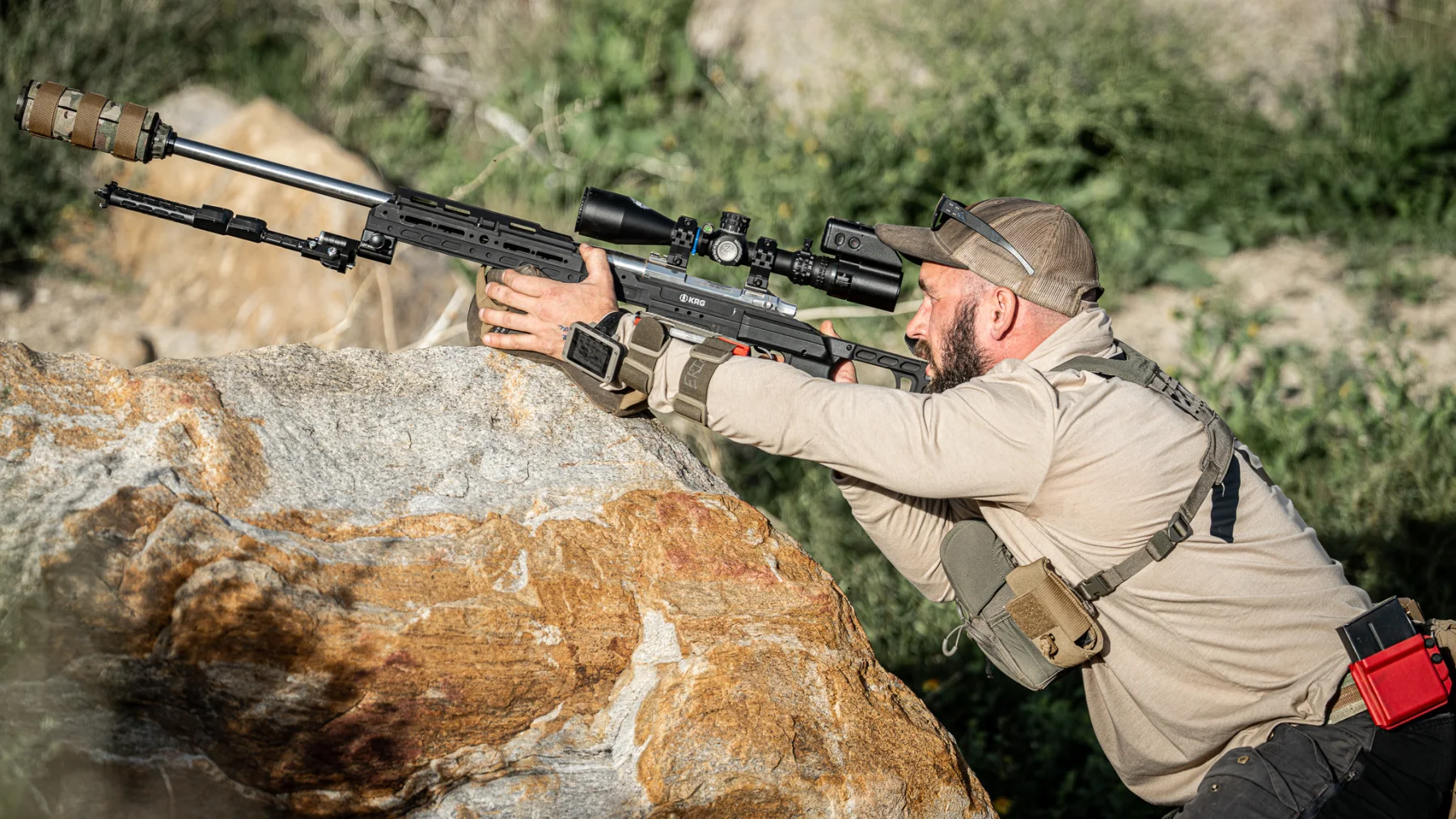
Train with us
The work behind the talk.
These debriefs are how we hold ourselves accountable for what we teach. If you want to train with us — same instructors, same process — pick a class on the calendar.