
Rifle system
The precision rifle system
Every component earns its place, or it becomes a variable you fight.

The rifle system is everything that has to work before the shot breaks: rifle, optic, mount, muzzle device, support gear, ammunition, data, and the shooter. This lesson is not a shopping list. It is a filter for choosing parts that help you access the rifle's mechanical accuracy instead of adding one more variable to fight.
- Pillar
- Rifle system
- Level
- Foundation
- Built for
- Foundation prep
- Framing
- System audit
Watch first
See the full system on the table.
Start with the video. Phil lays the parts out and explains the logic behind them: what the action is responsible for, how barrel choices change performance, when chassis features matter, how optics fit into the system, and why the last component is still the shooter.
The frame
Mechanical accuracy is the rifle. Practical accuracy is you plus the rifle.
Before you pick a single part, separate the rifle's potential from what actually shows up on target once a human gets behind it.
Your rifle's capability to produce consistent results in a controlled environment — its potential. A good rifle might hold half MOA across a 10-shot string when everything is perfect.
What happens when you add the human element — wind calls, your wobble zone, position consistency, and trigger control under field conditions. That same half-MOA rifle may shoot 1 to 1.5 MOA in the field. That's normal.
Phil’s goal, and every Cadre instructor’s, is to get the most out of the rifle’s mechanical accuracy in any situation. He’s honest about the gap: the average shooter probably runs a half-minute gun at about 50% of its capability.
The first filter
Start with the job, then select the hardware.
A PRS rifle, NRL Hunter rifle, coyote rifle, law-enforcement rifle, and hybrid training rifle can all be accurate. They should not all be built the same way.
PRS / field competition
Prioritize balance, recoil management, sustained strings, reliable magazines, barricade geometry, ARCA, and an optic that tracks consistently, every time.
NRL Hunter / hunting
Weight matters. Carbon barrels, lighter mounts, compact support gear, practical bipod height, and a simpler optic can make more sense than a full-weight match setup.
LE / military
Reliability, repeatable zero, transport, suppressed performance, and awkward-position usefulness matter more than chasing a trend.
First rifle / hybrid
Keep it boring and compatible: supported footprint, clean trigger, barrel matched to the job, reliable optic, good ammo, and support gear you will actually practice with.
Audit the system, not the catalog.
Use the class as a buying filter. A precision rifle system is a set of connected choices that should make the rifle easier to shoot well.
- What is the rifle's primary job?
- What must it weigh when fully configured?
- How many rounds will it fire in a typical string?
- Does the action footprint give you future upgrade options?
- Can the chassis fit your body and support your shooting style?
- Does the optic track, return to zero, and speak the units you use?
- What changes zero: muzzle device, suppressor, mount, ammo lot, or solver input?
- What part of the system still depends on the shooter getting better?
The barreled action
The heart of your system.
The action feeds, chambers, locks, extracts, ejects, houses the trigger, and gives the optic a mounting platform. Common footprints like Tikka and Remington 700 stay popular because chassis, triggers, stocks, rails, and barrels are easy to source as the rifle evolves.
What the action is responsible for
Feed
Reliable feeding of ammunition from the magazine.
Chamber
Smooth chambering of each round as the bolt runs forward.
Lock
Secure lock-up when the bolt closes behind the cartridge.
Host the optic
Provides a stable, repeatable mounting platform.
Features to consider
- Scope bases and mounting options — integrated rails vs. separate bases
- Split-rail systems for weight considerations
- Bolt-throw smoothness and consistency
- Ejection reliability
Aftermarket triggers
A cleaner trigger can remove a major variable, but a lighter trigger is not automatically a better teacher. Learn to run a clean press first, then upgrade when the rifle is ready to reward it.
- TriggerTech: What Phil runs. His competition rifles have TriggerTech Diamond two-stage triggers, set around 12 to 16 ounces.
- Timney: Another aftermarket trigger Phil names, along with Bix’n Andy.
It matters for getting the rifle stable and on target. A reliable trigger provides a clean, predictable break which helps you press the shot without disturbing your reticle’s position on the target.
Barrel selection
Weight, balance, heat, stability.
Barrel choices change weight, balance, heat behavior, bullet stability, and velocity. Four decisions do most of the work: contour, material, twist rate, and length.
Contour — weight vs. heat
Contour is the barrel's outside profile — how much steel it keeps as it tapers from the shank to the muzzle. More steel is stiffer and slower to heat up, so groups hold through longer strings. Less steel is easier to carry all day. Three common profiles:
Ø 1.20″ · 3″ shank · Ø 0.875″ muzzle · 25″ finish length
The contour Phil ran as a Marine Scout Sniper. A plain taper that he puts a little above the middle of the pack for weight, and still lighter than a straight 1.250″ taper.
Ø 1.20″ · 3″ shank · Ø 0.90″ muzzle · 26″ finish length
The Army’s M24 contour. Same shank as the M40, a little more steel at the muzzle. Phil treats the two as one family: a plain taper to the muzzle with no aggressive step-down.
Ø 1.25″ · 3″ shank· Ø 1.00″ at 5.5″ · Ø 0.90″ muzzle · 30″ finish length
Drops fast in front of the shank, then runs nearly straight to the muzzle. Phil says the barrel on his Aero looks a lot like one. The heaviest of the three, and heavier barrels hold their groups through longer strings.
Material: steel vs. carbon fiber
- Steel: the traditional choice, with excellent performance. Preferred choice when high round count strings are the norm.
- Carbon fiber: a steel barrel trimmed down and wrapped in carbon. Significantly lighter, at a higher cost. Phil says his carbon barrels also cool down faster. Valuable for hunting or weight-conscious competitors.
Twist rate & length
- Twist: match it to the bullets you shoot most. Heavier bullets need faster twist (lower numbers). In 6.5mm, 1:8 is the default for 140–150 grain bullets. Every 6.5 on Phil’s table in the video, Creedmoors and a PRC, is a 1:8. Shooting something else? Run your bullet through Berger’s stability calculator.
- Length: longer = higher velocity and better downrange performance; shorter = less weight and better handling. Roughly 15–25 fps per inch, cartridge dependent.
Chassis systems
Ergonomics and stability — where you meet the rifle.
The chassis is the shooter-to-rifle interface. It controls how the butt pad, cheek riser, grip, support hand, magazine well, forend, and accessory system all meet your body and your shooting style.
The four points of contact
Every time you get behind your rifle, you should have the same four consistent points of contact. Consistent contact is what makes a repeatable position possible; inconsistent contact turns the shooter into the variable.
Shoulder connection
The recoil pad lands high and medial, against the collarbone and neck — the same spot every time.
Cheek riser
Your cheek or jaw lands on the riser in the same spot every time, putting your eye behind the scope.
Grip area
Your firing hand finds a comfortable, repeatable grip for clean trigger control.
Support hand
Your support hand has a stable position — on the rear bag or the forend when shooting positionally
Length of pull (LOP)
LOP is the distance from the trigger to the butt pad. Many shelf rifles run long; adjustability can help smaller-frame shooters square behind the gun, maintain eye relief, and return to the same shoulder connection.
Additional features
- Folding stocks: easier transport, more compact storage, better access for cleaning.
- Beefy mag guard / barricade stop: a solid reference point when you brace against a barricade.
- Accessory mounting: multiple points to adapt the rifle over time.
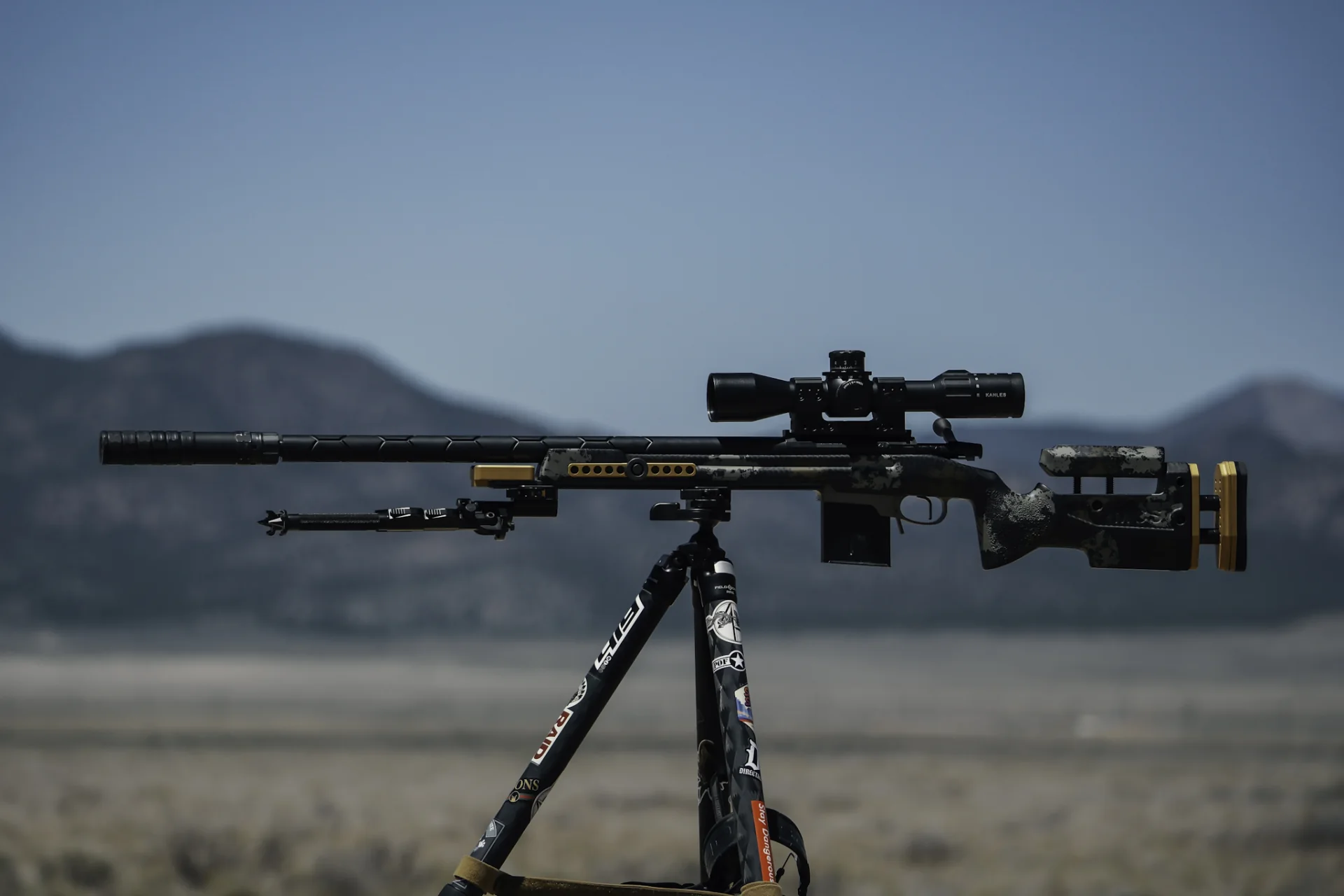
Optics
Seeing the solution.
The optic is how you aim, measure, and correct. Start with the anatomy, pick your unit of measure, then prove the scope does what it promises.
Scope anatomy
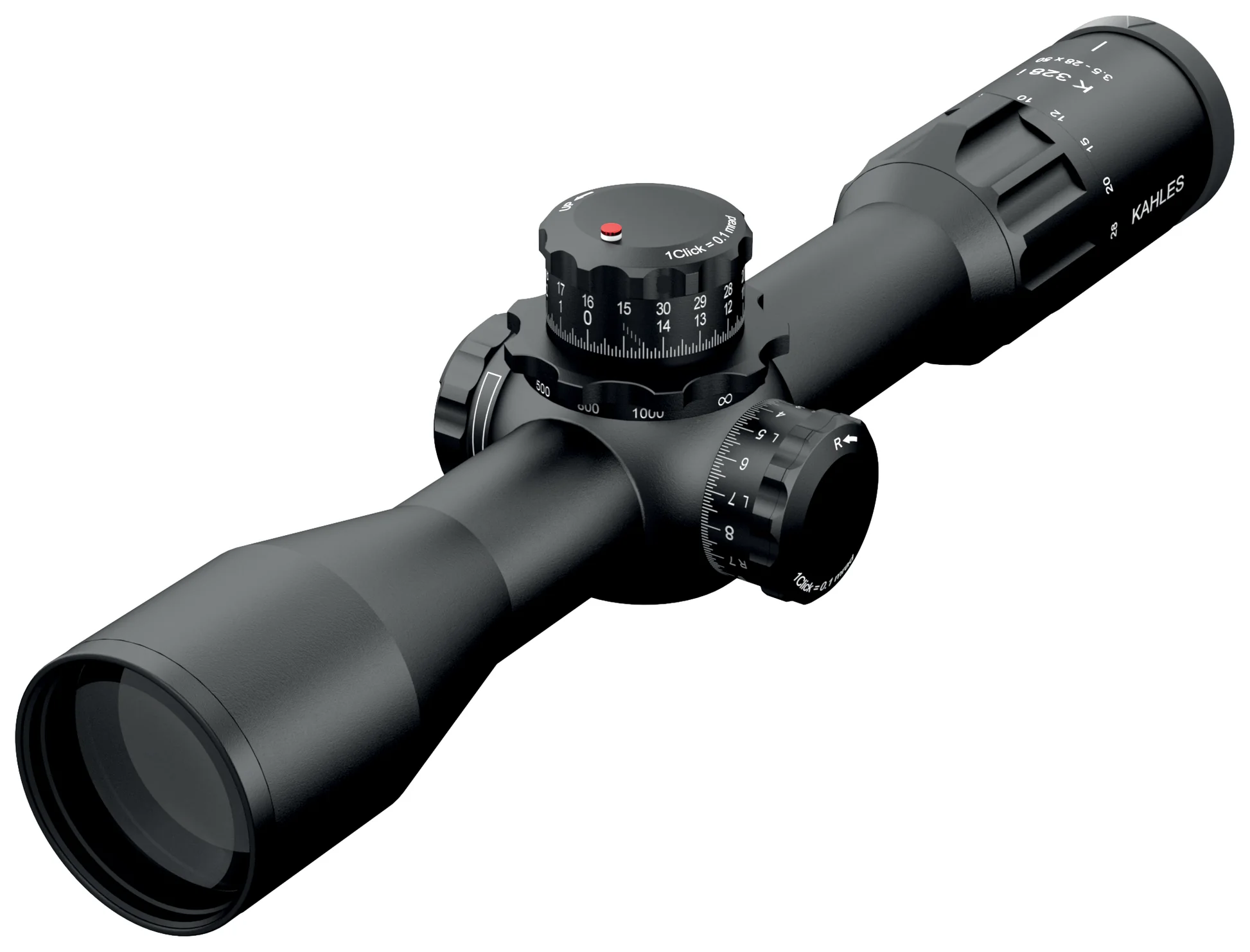 12345
12345- 1 Ocular lens The lens you look through.
- 2 Magnification ring Increases or decreases magnification
- 3 Elevation turret Adjusts point of impact vertically.
- 4 Windage turret Adjusts point of impact horizontally.
- 5 Parallax adjustment Eliminates parallax error at different distances.
Elevation is almost always on top — but the other knobs move around. On this KAHLES the windage turret sits on the left and parallax on the right. On some optics (a Schmidt & Bender, for example) that layout is flipped or relocated. Learn your scope's specific layout so you're not hunting for a turret under time.
MOA vs. Mil
MOA — Minute of Angle
Based on degrees of angle. Roughly 1 inch at 100 yards. The system most hunters lean on.
Mil — Milliradian
A decimal angular system. One mil is roughly 3.6 inches at 100 yards or 10 cm at 100 meters. What most competitive shooters use.
One mil ≈ 3.44 MOA — same target, different rulers. Most mil turrets adjust in 0.1-mil clicks.
Your reticle and turrets must match. Don't mix MOA and Mil. Then pick the unit the people you shoot and train with already use, so your data and your calls speak the same language.
Tracking
Your scope's ability to accurately move the point of impact when you adjust the turrets. Dial 10 Mils up, the impact should move exactly 10 Mils.
Return to zero
Your scope's ability to come back to your original zero after dialing. This is critical for anyone who dials frequently — miss it and every follow-up shot inherits the error.
The mount is the critical link between your optic and your action. Invest in a quality mount to prevent loss of zero, inconsistent tracking, or scope damage. An anti-cant level belongs here too — keep the rifle level to gravity when terrain and your eye try to lie to you.
Muzzle devices
Managing recoil and sound.
Brakes and suppressors are not just comfort choices. They change how the rifle recoils, how easy it is to spot impacts, and where the rifle prints after the change.
Traditional muzzle brake
- RecoilExcellent recoil reduction
- SoundSignificant concussion
- Best forCompetition — where spotting your own impacts matters.
Suppressor
- RecoilGood recoil reduction (less than a brake)
- SoundReduces sound and concussion
- Best forExtended shooting and hunting, where legal.
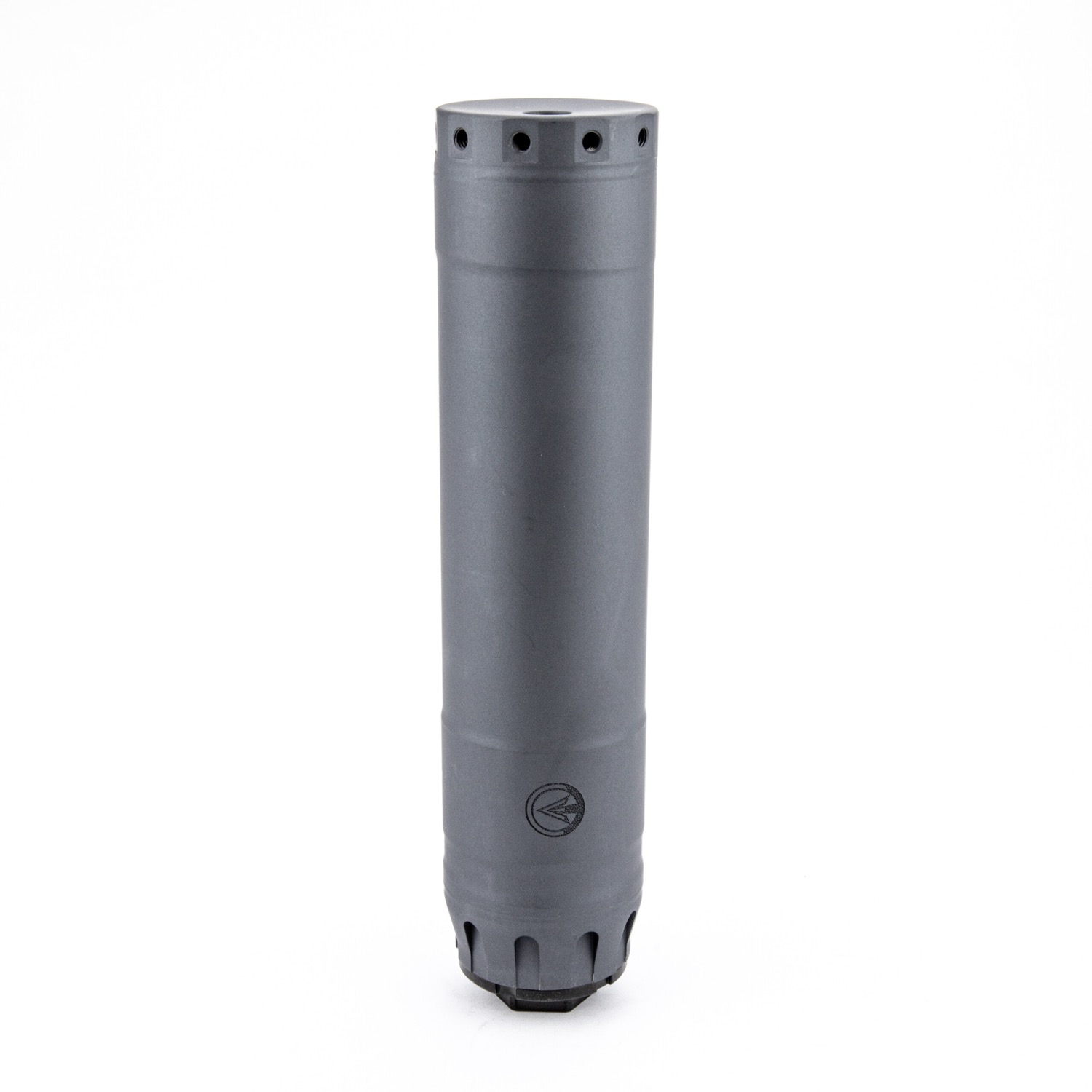
Proper mounting
Install the device to proper torque specifications. A device that loosens can create elevation issues and turn a good rifle into a problem mid-string.
Ballistic impact
Adding or changing a device shifts barrel harmonics — and your point of impact with it.
Always re-verify your zero after installing or swapping a muzzle device before a hunt, class, or match. A point-of-impact shift is normal — the harmonics and gas behavior at the muzzle just changed.
Bipods
Stability and support.
The bipod supports the front of the rifle so the shooter can square behind the gun and use the support hand for fine control. Buy enough height and stability for the terrain, not the most complicated legs you can afford.
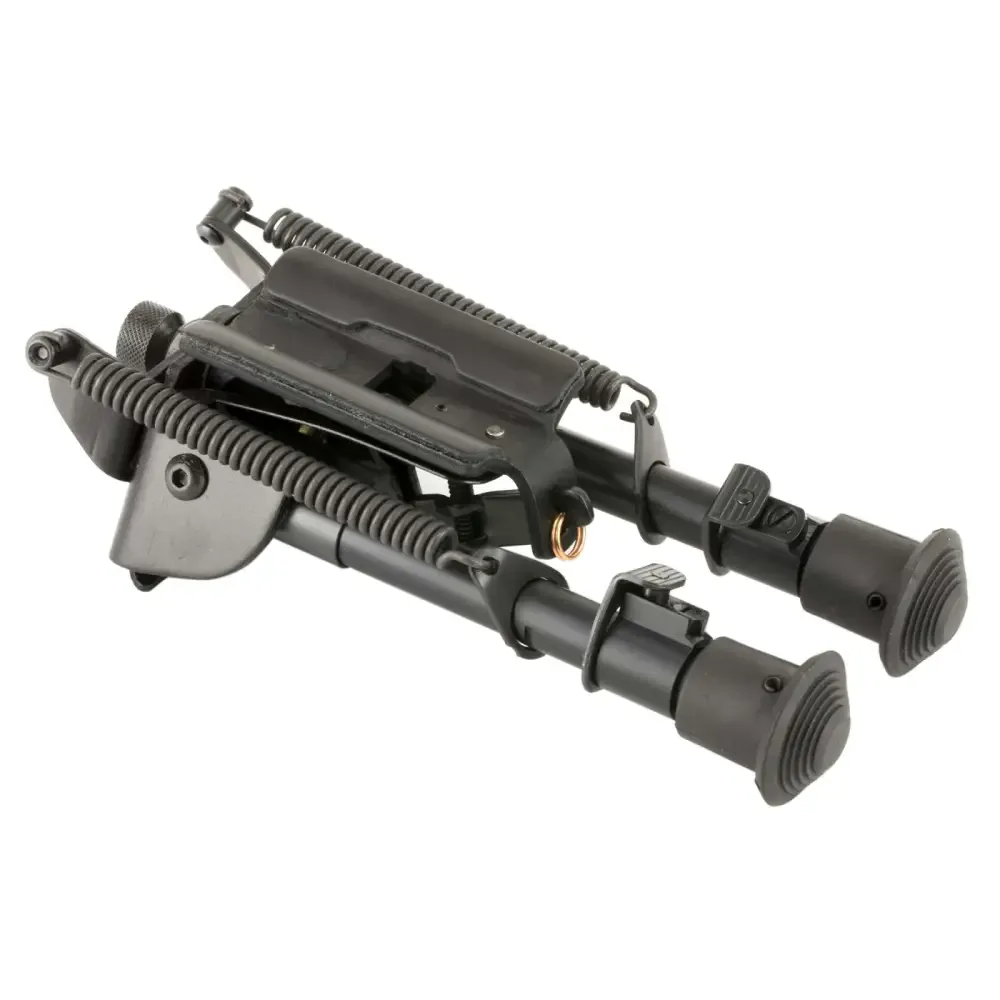
Harris BRMS
Traditional, affordable entry point.
Beginners, general use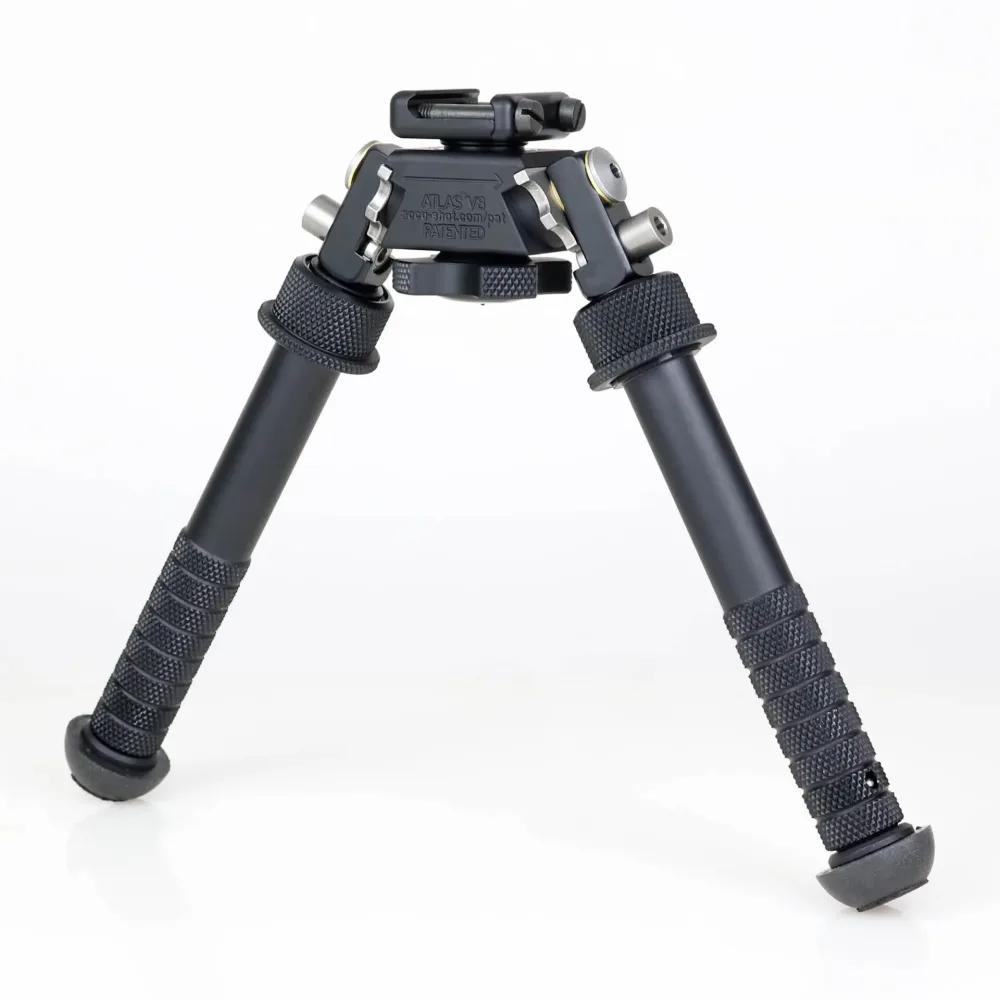
Atlas
More adjustable, better leg stability.
Competition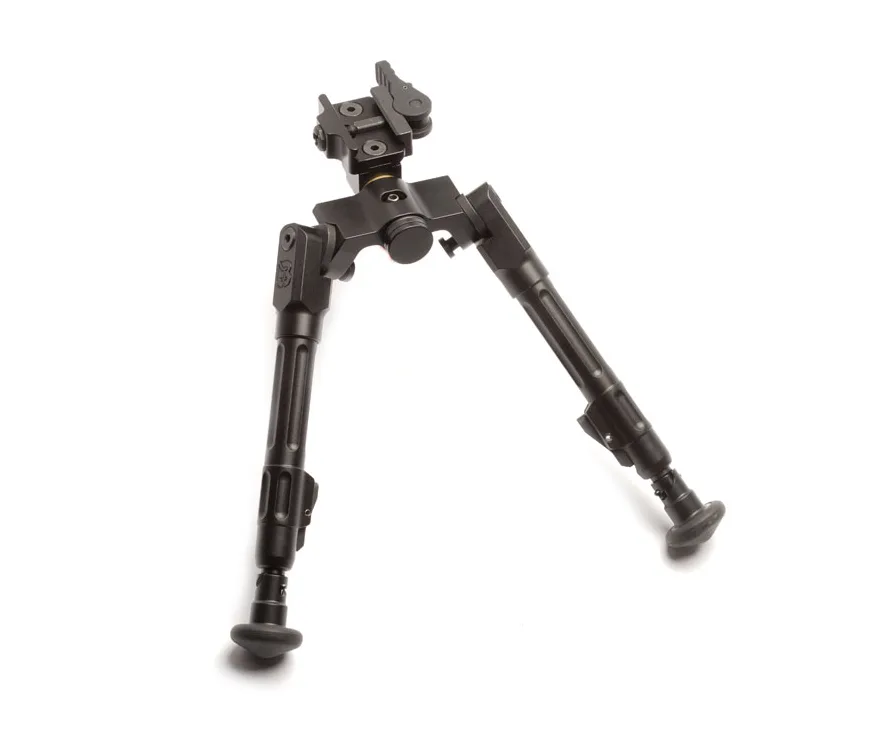
Thunder Beast
Lightweight build.
Hunters watching weight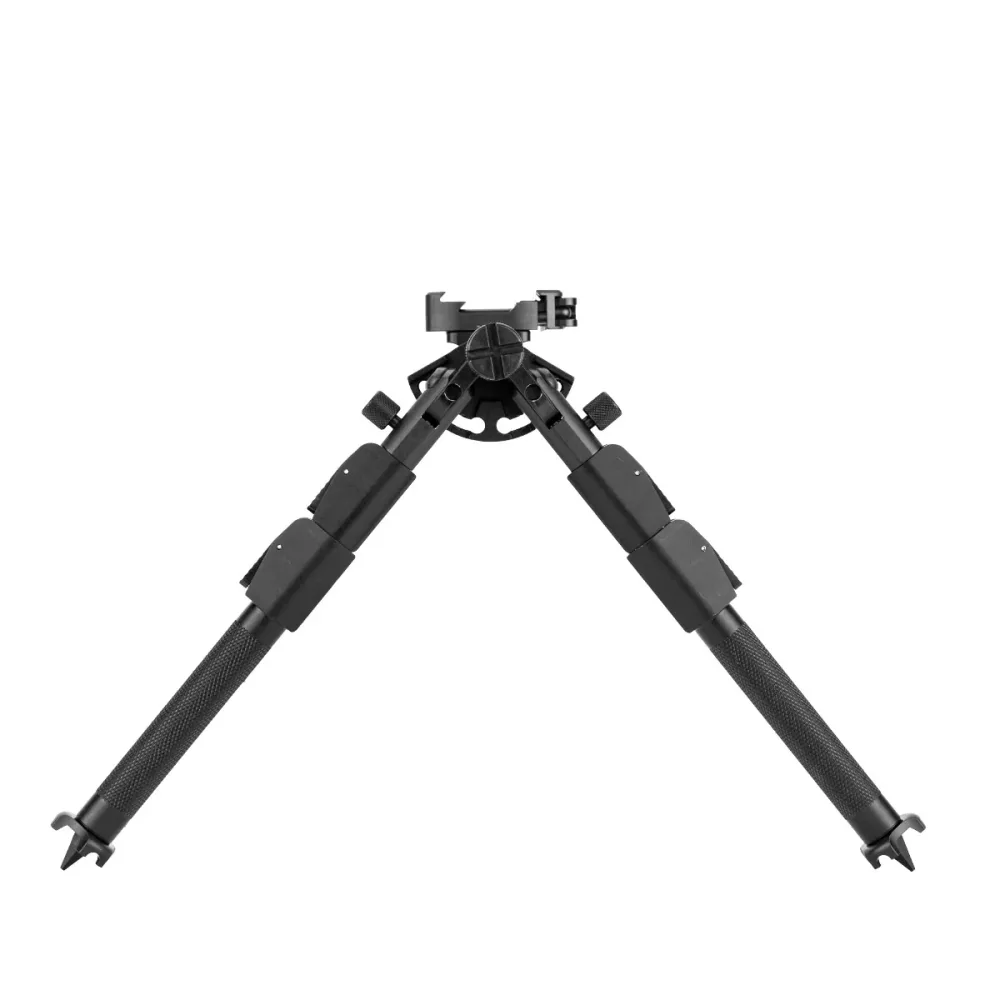
MDT CKYE-POD
Highly versatile across multiple configurations.
Competitive shootersDesigns with a wider, splayed leg stance give your support hand a better interface on the rear bag — which improves overall stability, especially as your wobble zone grows in positional shots.
Ammunition
Feeding your system.
Match your ammunition to your skill level and application. Phil sorts it into three tiers, and the right one is the one that fits where you are right now.
Match grade
Entry-level precision with good consistency — Hornady, Berger, Federal Gold Medal Match.
New shooters building fundamentalsPrecision ammo
Tighter tolerances and higher quality control — Eagle Eye, Trace.
Competitors chasing measurable improvementHand loads
Ultimate precision potential, tailored exactly to your rifle.
High-volume shooters willing to invest the timeAs targets get smaller or farther, velocity consistency and bullet performance matter more. Extreme spread, standard deviation, and ballistic coefficient tell you whether the ammo is holding up at distance. They do not replace good mechanics.
Support gear
The final pieces.
Support gear should reduce variables, not add clutter. The right pieces get you stable faster, manage recoil, feed the rifle reliably, and let you trust the firing solution.
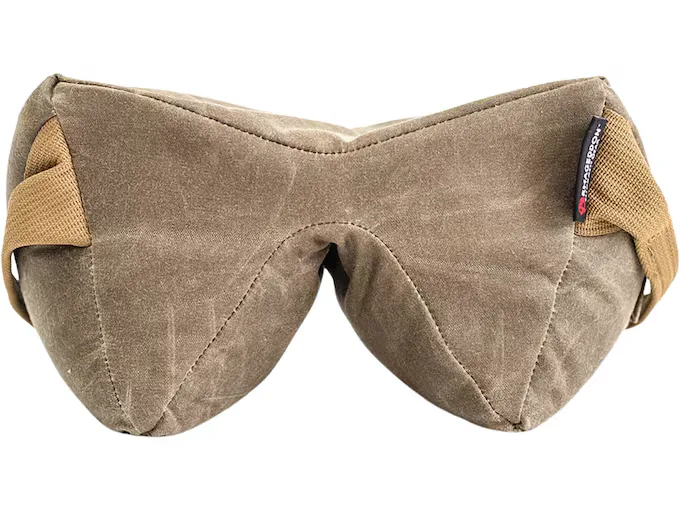
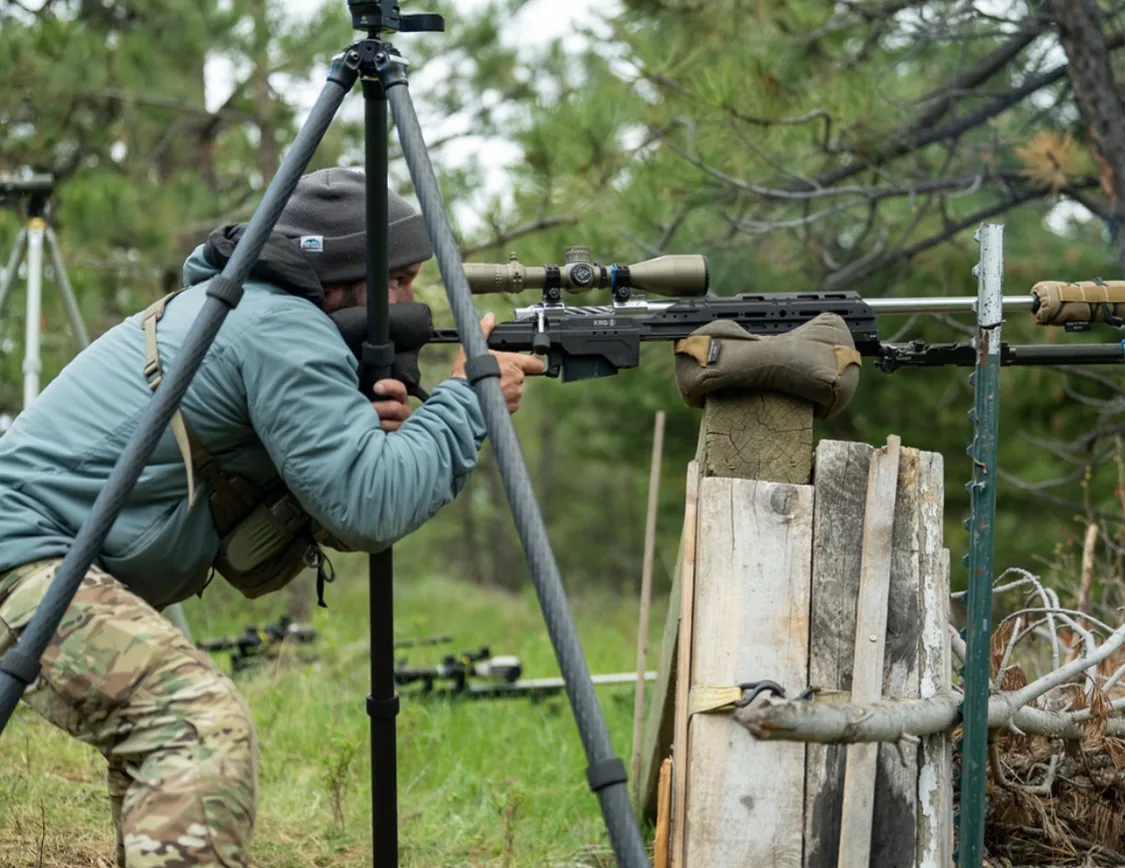
Rear bags
Stable support under the buttstock for fine elevation control.
Phil’s is a waxed-canvas Armageddon Gear OG filled with Git-Lite, because that fill forms to the rifle.
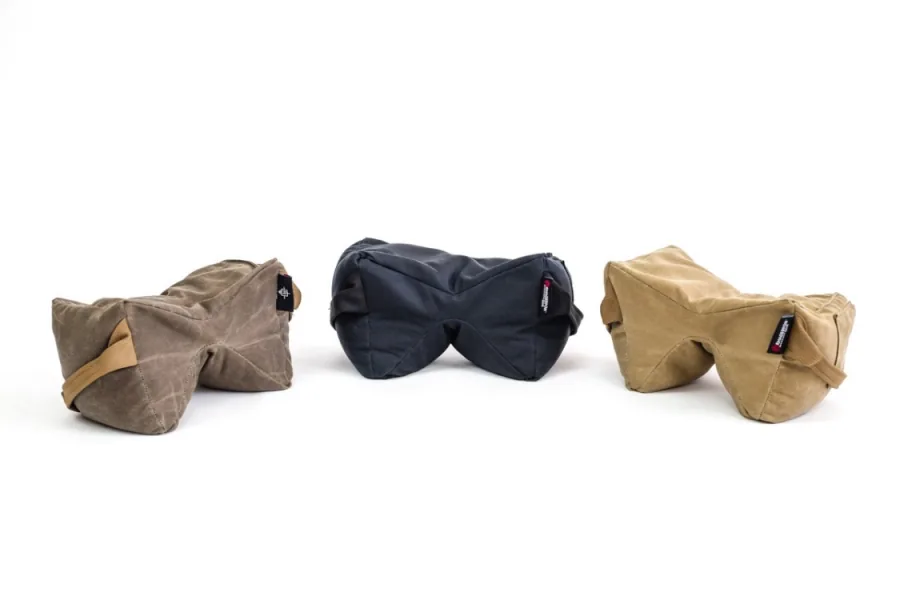
Front support bags
Versatile support for barricades and unconventional positions.
Schmedium Game Changer bags — what we typically use for barricades and field rests.
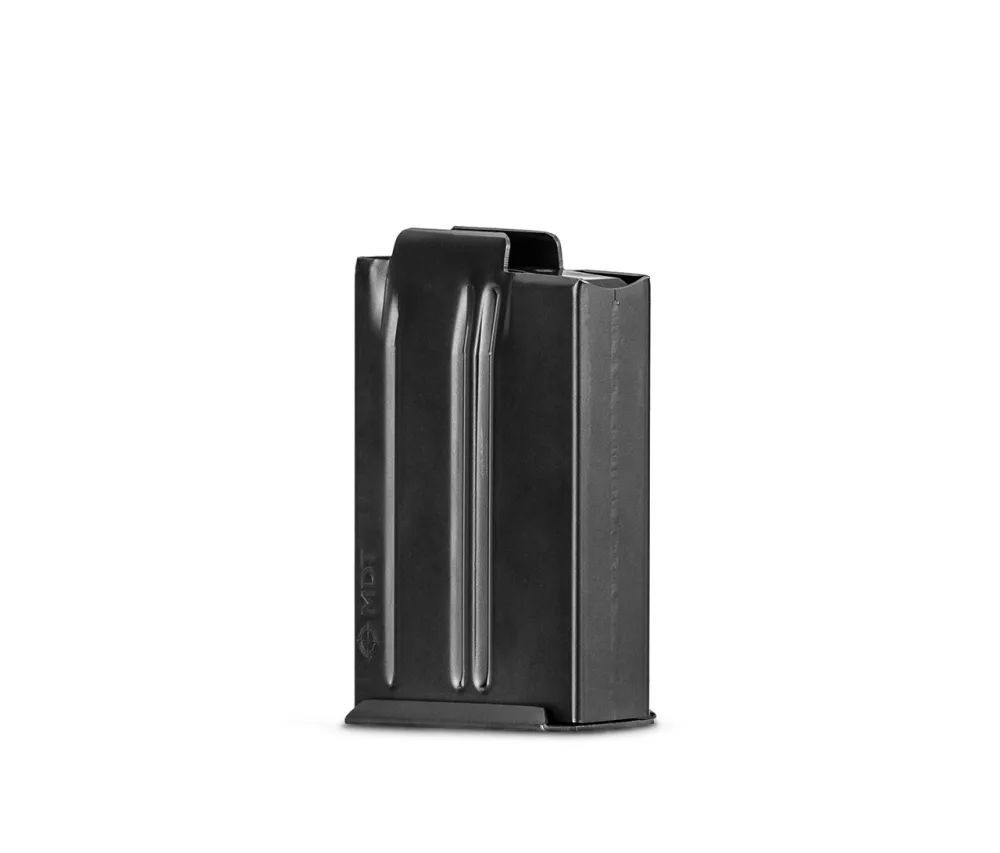
Magazines
Directly impacts feeding reliability under pressure.
AW (Accuracy International) mags — preferred for reliability.
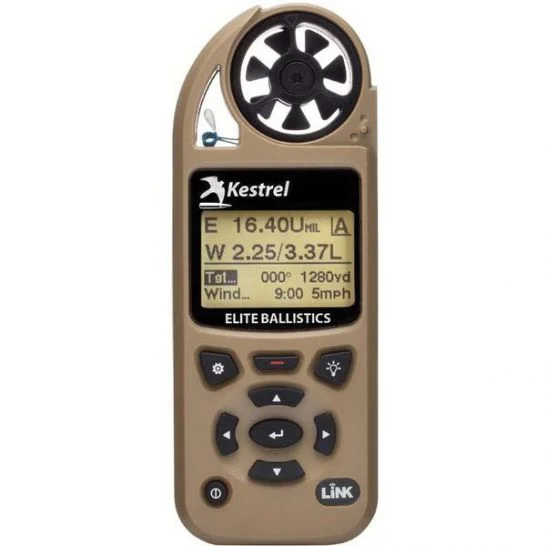
Ballistic solver
Turns your data and conditions into a firing solution.
An essential tool — the calculator behind every long shot.
Ballistic solvers — the calculator behind the shot
A solver turns your muzzle velocity, ballistic coefficient, and current conditions into a dialing solution. These are the ones we reference most in our ballistics classes.
Kestrel Elite
Applied BallisticsWeather meter and solver in one unit — reads conditions on the spot and builds the solution.

Hornady 4DOF
Four-degrees-of-freedom modelFree, and what Phil uses about 90% of the time for teaching and competition. It models the bullet in flight rather than a single BC.

Applied Ballistics
AB QuantumPhone-based solver with deep profile control. Phil names it and 4DOF as the two he sees used most.
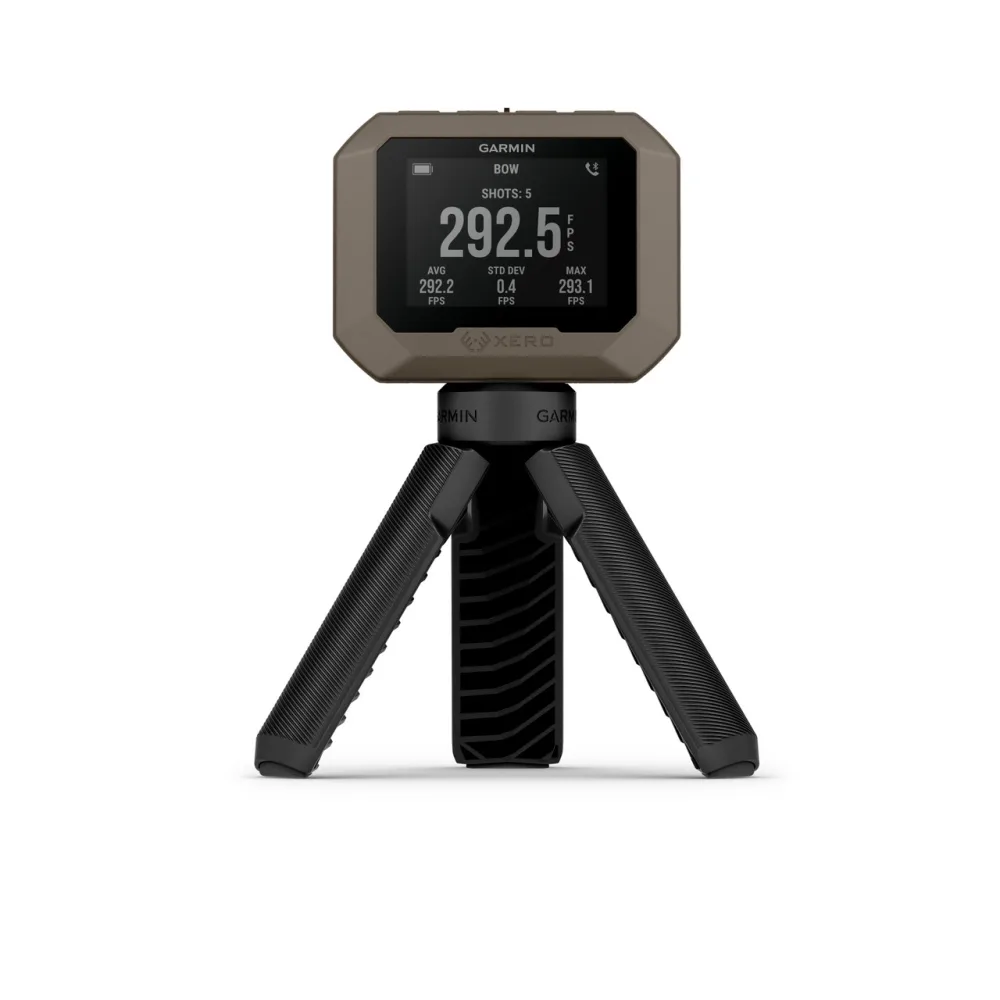
Garmin devices
On-board solverRangefinders and watches that fold the firing solution into the same device you range with.
The solver is only as good as the inputs. Bad muzzle velocity, wrong bullet data, stale atmospherics, or a zero you have not confirmed still produce bad dope.
The human element
The shooter is not a footnote.
Phil heard this line somewhere and it stuck. He brings it up as often as he can: “You could have a $10,000 rifle, but if you are a $10 shooter, at the end of the day you have a $10 precision rifle system.” The gear can remove variables. The shooter has to close the gap.
The human variables
- Consistency in building positions
- Trigger control and follow-through
- Wind reading and range estimation
- Mental management under pressure
- Physical conditioning and stability
System integration
Understanding how every component works together is critical:
- Your optic must match your shooting style.
- Your chassis must fit your body.
- Your ammunition must suit your application.
- Your zero must stay honest when mounts, muzzle devices, ammo lots, or solver inputs change.
Everything should work together as one integrated system, optimized for your specific needs.
Building a precision rifle system is about understanding how each component contributes to the whole. Invest in quality components — but invest even more in quality training and practice time.
Train with us
Bring the rifle. We'll help you close the gap.
The equipment can only remove variables. The training teaches you which variables are still yours — and how to shrink them.