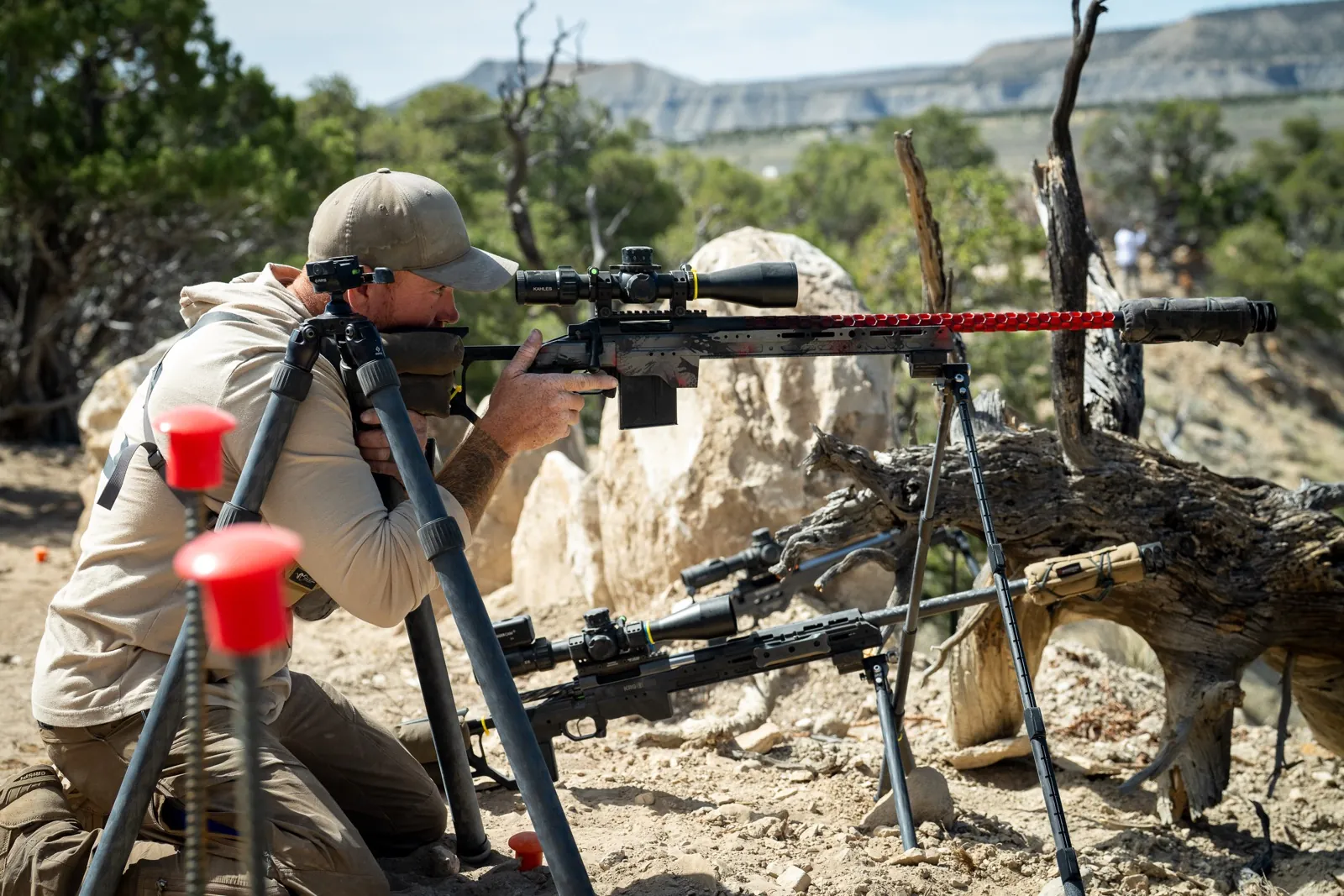
Jonathan Bumpus grew up in Wareham, Massachusetts, a small town of back roads, cranberry bogs, and timber.
He was in the woods and on the water as soon as he could follow his father out the door. Hunting and fishing were part of how he was raised, and the men who taught him weren't just his father. They were his father's friends, men he called uncles, who put guns in his hands and took him seriously early.
Unlike most of the guys at The Cadre, Jon grew up shooting.
His first shotgun was a single-shot .410 from New England Arms, and he was running it around age seven. Before that, pellet guns and .22s. He learned to shoot before he learned to drive, and the basics were drilled in by men who didn't cut corners.
He stayed busy in those years: baseball, basketball, football, and whatever the outdoors had to offer. But the thing underneath all of it was work.
Starting around fifth grade, he went to job sites with his father in construction, putting in ten- and twelve-hour days alongside grown men. He credits that, more than almost anything, for the work ethic he still carries.
The decision
Military service ran in the family. Both of his great-grandfathers served in World War II. His grandfather served in Korea. His father served during the Gulf War era. Jon never really questioned whether he'd serve. Only where and how.
That question got answered by a man named Greg, a friend of his father's who'd come back from two Iraq deployments, left the Marine Corps, and gone to work in construction alongside them. Jon was torn between the Navy and a shot at becoming a SEAL or going Marine Corps for a Recon billet. Greg got him thinking seriously about Recon first, then pushing toward sniper school from there.
By his sophomore year of high school, he'd made up his mind. At seventeen, ten days past his birthday, he enlisted with a Recon contract. He graduated high school, shipped for Parris Island in the summer of 2008, and never looked back.
Making a Recon Marine
Boot camp at Parris Island. Infantry training at the School of Infantry West, Camp Pendleton. Then the Basic Reconnaissance Prep Course and the Basic Reconnaissance Course itself, which he graduated in May 2009. He arrived at 1st Reconnaissance Battalion, Bravo Company, and walked into a unit already building toward a deployment to Afghanistan.
There wasn't much time for the things people associate with Recon: the parachuting, the diving, the long-range patrols. The workup was fundamentals: shoot, move, communicate. Live-fire maneuver. Getting a team of men ready to fight together in Afghanistan.
They deployed in 2010. For the next few months, Jon was in the middle of some of the heaviest fighting of the war, in a handful of places in Afghanistan he'd rather not relive. Hunter-killer operations. Ambushes. Contact patrols. Most days brought a gunfight, and the platoon found the enemy wherever it could. They were good at it.
He came home in 2010 and went straight to sniper school. Pre-sniper at Division Schools, then the Basic Sniper Course, a pilot course at the time that was unusually heavy on marksmanship, running six or seven separate shooting qualifications inside the course itself. He graduated in 2011 and went right back to work.
The second Afghanistan deployment followed in 2011. Same province, but the enemy had adapted. The daylight gunfights had become nighttime engagements. Heavier weapons. Indirect fire: grenades and mortars. The fighting was less constant but more complex.
The teaching years
After his second deployment, Jon moved into what became a long career as an instructor. He completed Marine Corps Water Survival Instructor School, the Marine Combat Dive Course in Panama City, and Combat Instructor School at Camp Pendleton, then taught at the Basic Reconnaissance Course for about a year and a half before moving to the Scout Sniper Schoolhouse at Camp Pendleton. Teaching precision and tactics to the next generation of Recon Marines and snipers was exactly where he wanted to be.
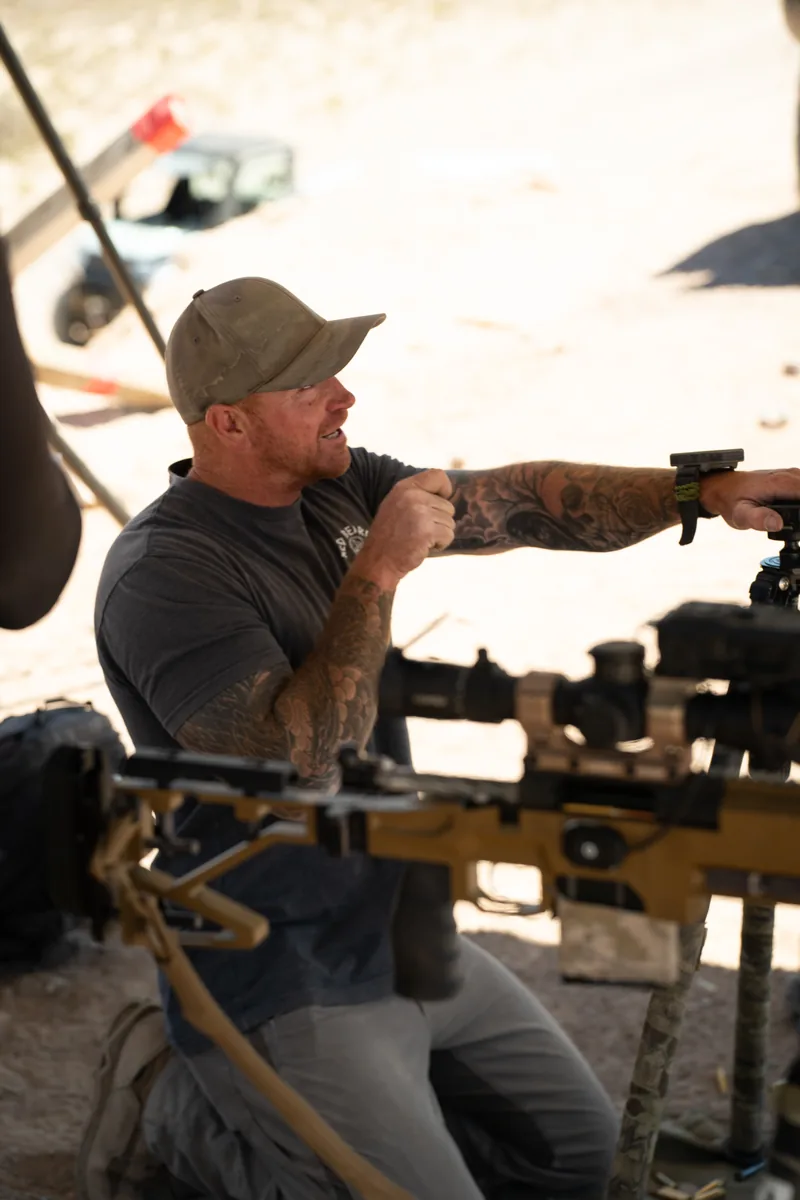
In 2017, fresh off an MEU deployment that took him to Sri Lanka, Egypt, and more than a dozen other countries, he received orders to Quantico, to TECOM's Methods of Entry course as an instructor. For three years he taught the full spectrum of breaching: mechanical entry with pry bars, sledgehammers, and concrete saws; thermal breaching with exothermic cutting torches; ballistic breaching with shotguns; and explosive entry. Plus the quiet ways in: lock picking and covert entry.
No one is smarter than everyone. I know my strengths. I know my weaknesses. And I know when to say: hey, come take a look at this and tell me what you see.
Platoon sergeant
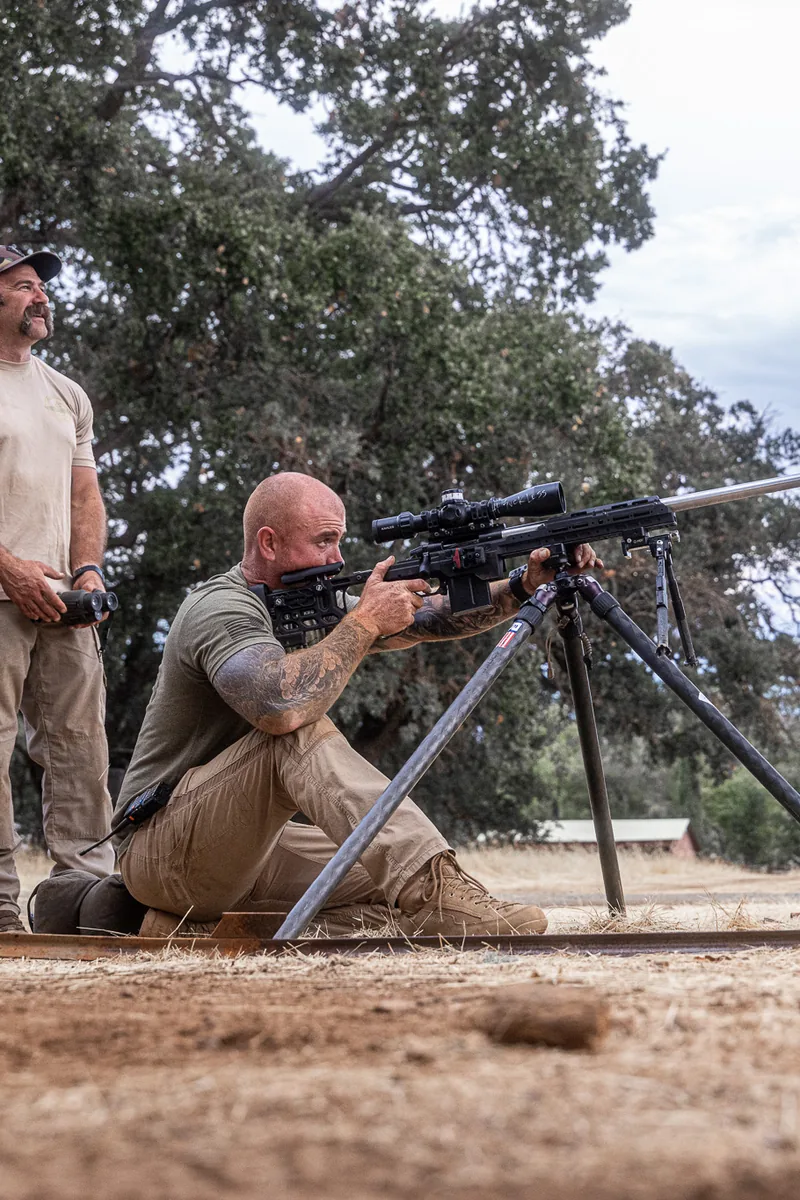
After Quantico, he went back to 1st Reconnaissance Battalion as a platoon sergeant: three Recon teams and a platoon headquarters under his charge, working up for another MEU deployment.
The workup ran the full gauntlet: advanced reconnaissance and surveillance, interoperability training, Visit, Board, Search, and Seizure, and Realistic Urban Training in places like Los Angeles and Reno. Raids in actual city centers, coordinating with SWAT departments as the partner-nation force, working through the complexity of civilian environments and urban terrain. Then weeks at sea.
They shipped out in 2022 and spent some time in the Pacific, working largely in the Philippines, Thailand, South Korea, and Brunei. Not kinetic, but not quiet either. A lot of combatant diving, parachuting, and shooting. Good work, done well.
Ask Jon which job he's proudest of and he won't hesitate: platoon sergeant.
Taking those young Recon Marines and watching them grow into what they became. That was the most fulfilling thing I've done. The deployments in Afghanistan were the most exciting. But this was the most rewarding.
After the MEU, he moved to 1st Marine Expeditionary Operations Training Group at Camp Pendleton, running the advanced and aerial sniper courses before moving to the Close Quarters Battle section. From there, orders took him to 4th Reconnaissance Battalion in San Antonio, Texas, where he has served as the Battalion Training Chief.
The Cadre
Jon met Phil Velayo when they were both teaching at the Scout Sniper Schoolhouse at Camp Pendleton. They taught together for about a year, and the connection stuck.
Years later, as he was thinking seriously about retirement and what came next, he saw what Phil had built: teaching precision marksmanship professionally, competing, staying deep in the craft. He recognized it immediately, called Phil, said he wanted to do something similar, and asked for advice.
Phil's answer was direct: start competing. Get back into it at the highest level you can. Build real experience behind the trigger in environments where the pressure is real and the feedback is immediate.
Jon did exactly that. A year later, Phil and Matt Solo asked if he wanted to be part of what they were building. That was The Cadre.
The thing The Cadre does that most outfits don't is keep the instructor-to-student ratio low enough that every shooter gets real one-on-one coaching, no matter what. Even when it costs them. Every core instructor is a former Marine Scout Sniper. They all compete. They all hunt. They speak the same language, and they pull each other in when a student needs a different eye.
We'd rather you walk away with a personal experience and as much education as we can pack into those days than make an extra dollar on a bigger class. That's how we built it.
The rifles
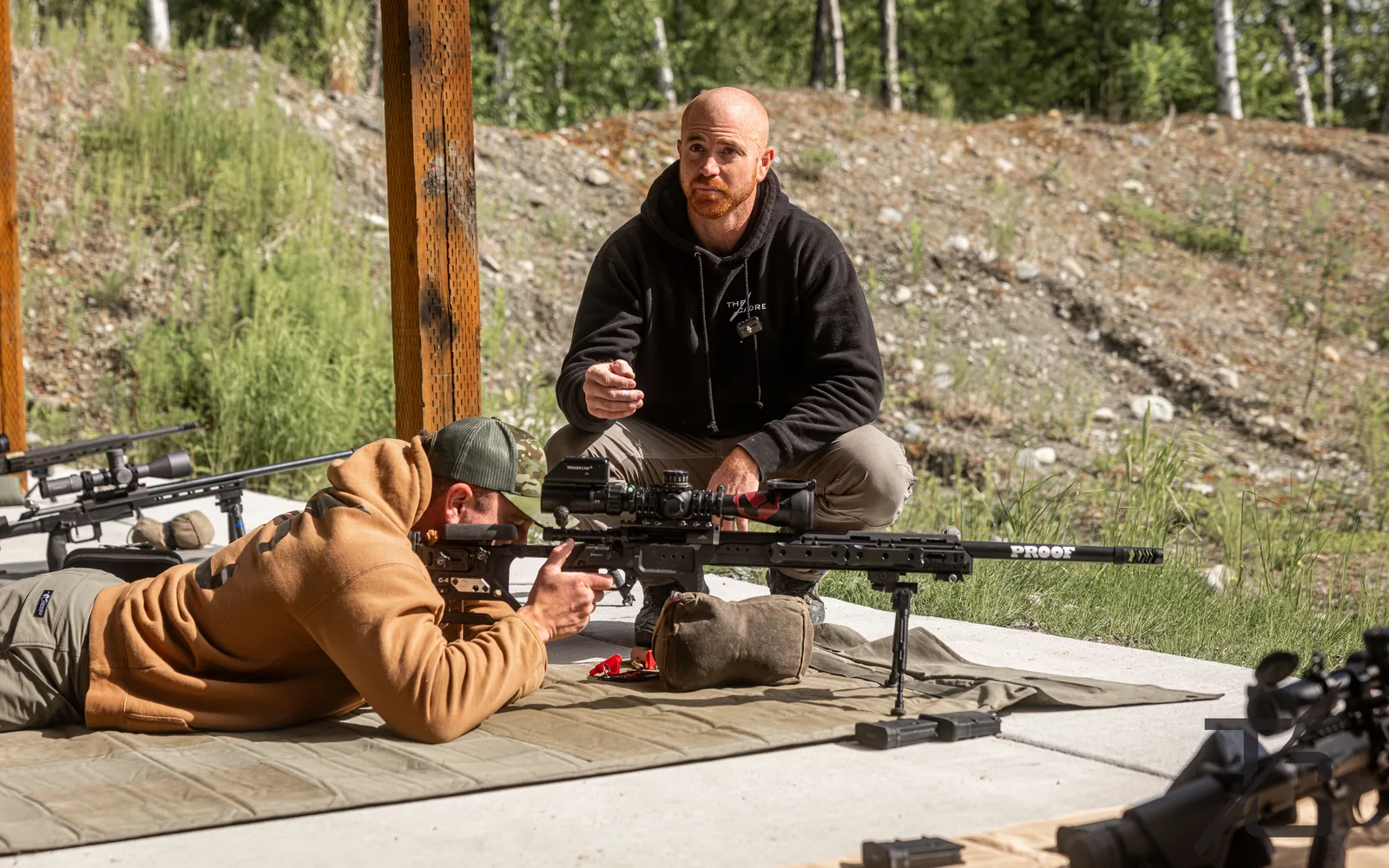
Jon runs different platforms for different purposes, and he doesn't mix them up.
- PRS & Precision
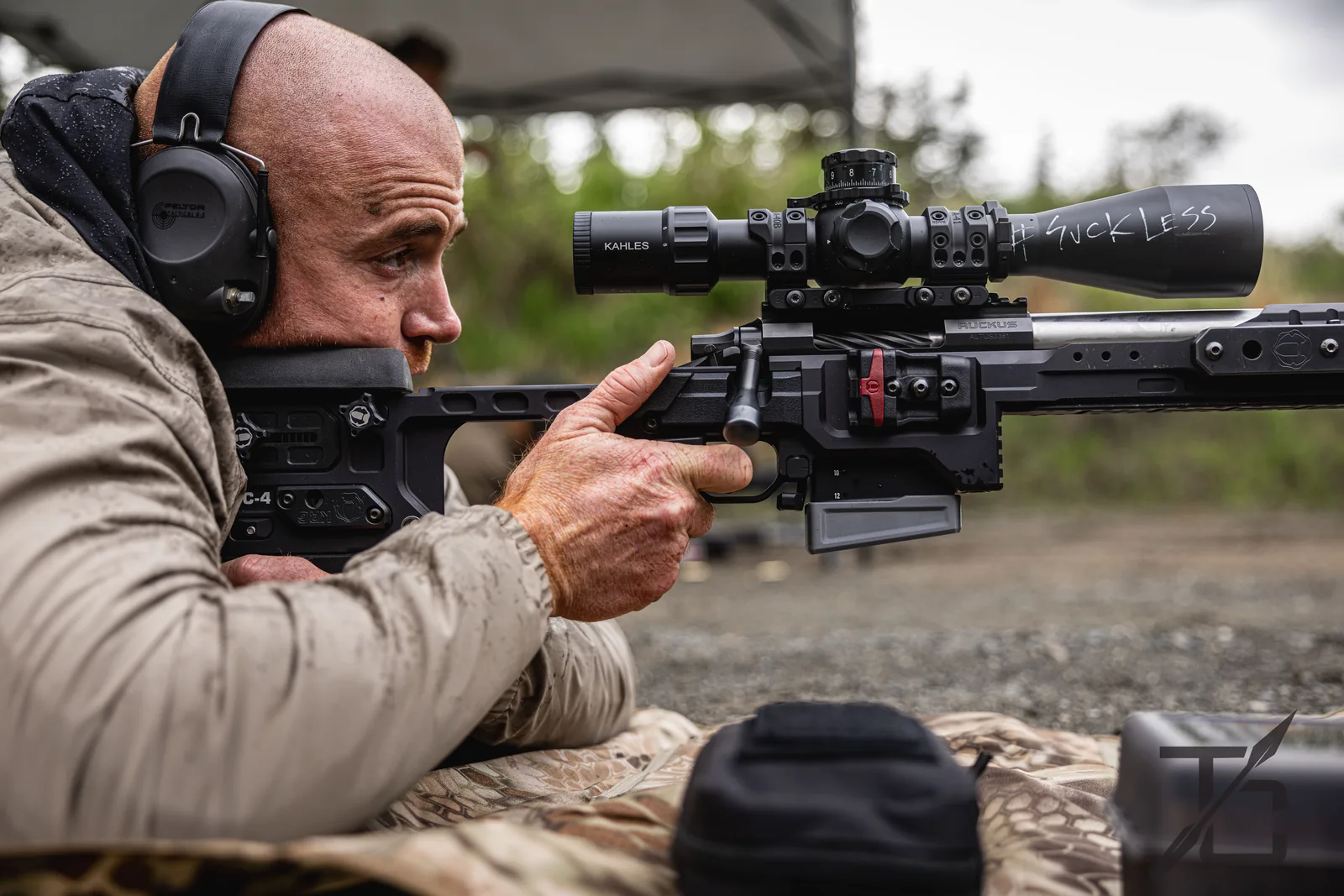
- Defiance action, Proof Research competition-contour barrel in 6mm Dasher, KRG C4 chassis, KAHLES K525i in a Spuhr mount, MDT bipods. It shoots lights out. It's also heavy, and he'll be the first to tell you it stays home when he's not competing.
- NRL Hunter current focus
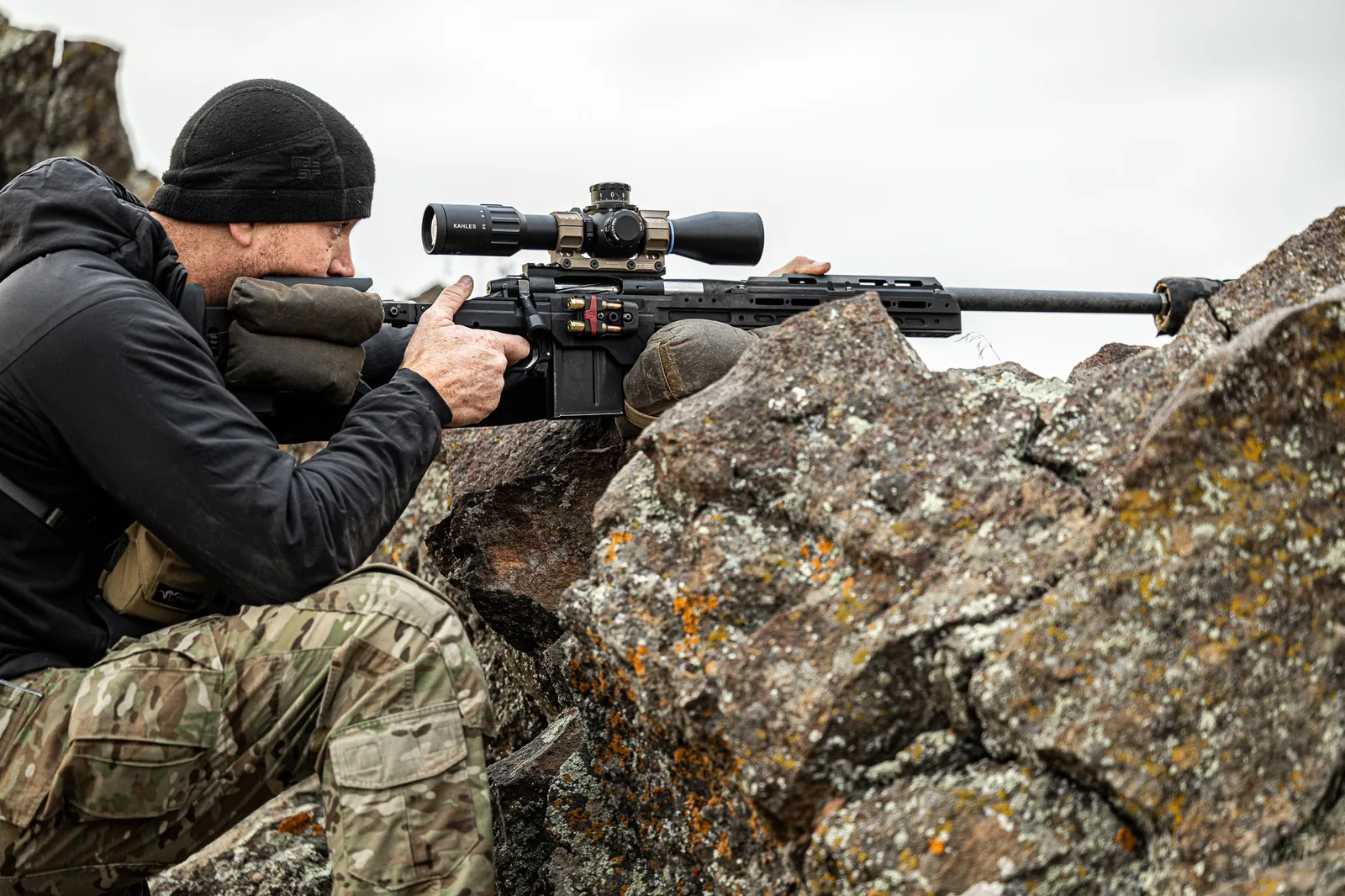
- A custom 6.5 Creedmoor from Red Beard Gun Works out of Portland, Texas. Red Beard takes a Defiance action and machines it into their proprietary Mjolnir action, with an M24-contour barrel fluted by LRI Machining in their Murder Hornet pattern to keep it light. KRG Whiskey-3 Pro chassis, MDT CKYE-POD legs, TriggerTech Diamond two-stage trigger, and a KAHLES K525i in Hawkins rings, with a Dirt Bag 307 Jimmy Bag finishing the package.
- Hunting
- A custom 7 PRC: Defiance action, Proof barrel, Leupold Mark 5 HD, suppressed with a KGM can.
- Close Quarters
- A Sons of Liberty Gun Works carbine with an Aimpoint Acro. Short barrel, built for CQB and tight-space work. A different tool for a different problem.
- Glass & Field Kit
- He prioritizes clarity, field of view, and light transmission over brand names: Swarovski EL Range binoculars, a SIG Kilo bino rangefinder, a Nightforce CFS spotter, and a Tango Innovations 4000 rangefinder, all on Really Right Stuff tripods. His field kit is built around Stone Glacier: pack, harness, and technical apparel he's put enough miles on to trust.
I keep it simple. Run what works. You can add complexity when you've earned it. But most of the time, simple is faster and simple is more reliable.
NRL Hunter
Jon shoots NRL Hunter with Phil Velayo as his teammate. The format suits him in a way straight PRS never quite did: find a target, range it, build a solution, make the hit. It's exactly the problem he spent a career solving. Speed matters, but it always matters less than the first-round hit. Competing as a team, he'll tell you, is one of his favorite parts of the whole thing.
How he teaches
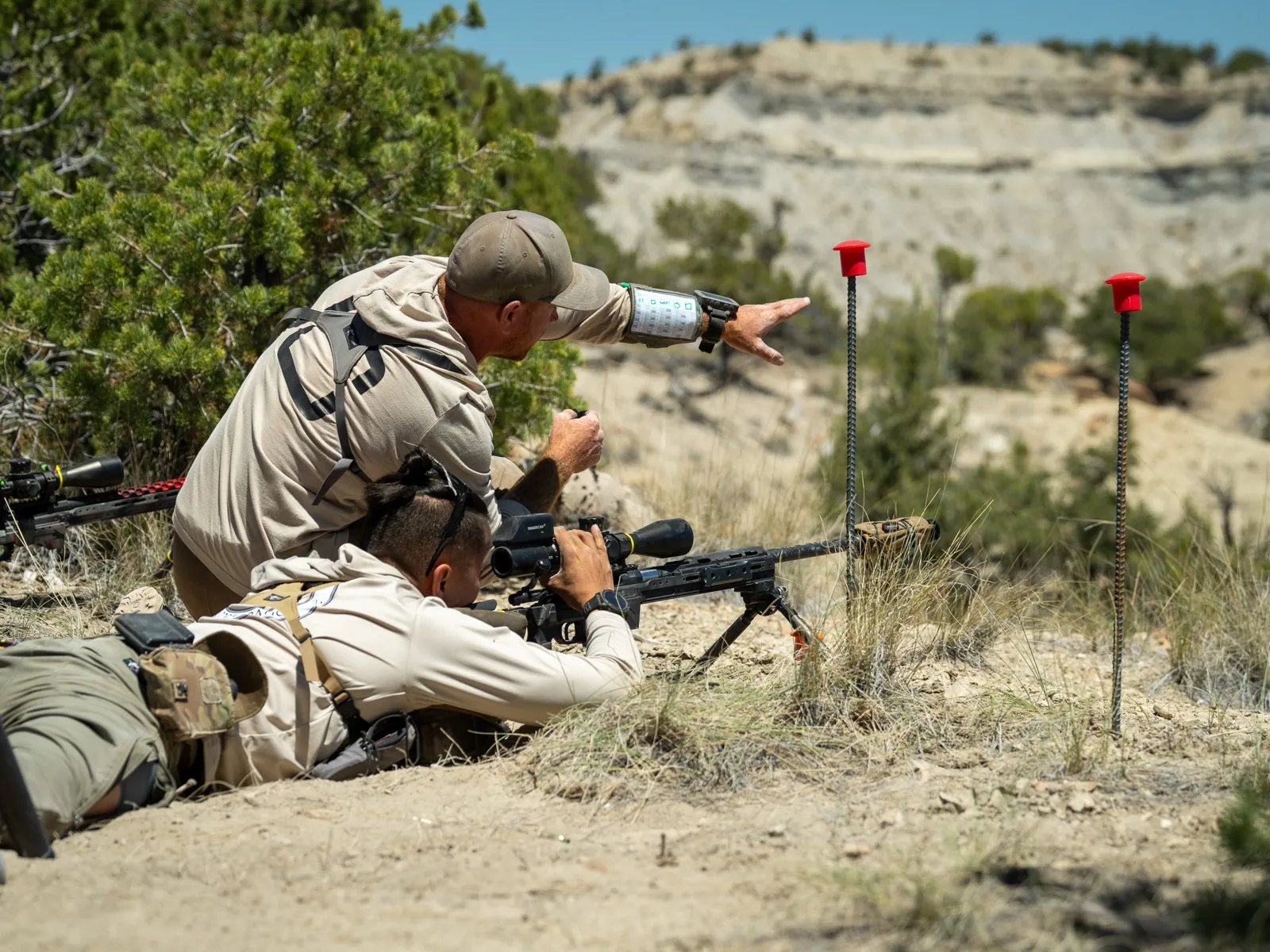
Jon starts with a diagnostic. He wants to know where you actually are before he starts telling you where to go. Fundamentals first. If the baseline needs reworking, that's where the time goes, because nothing else stacks cleanly on a crooked foundation.
Fixing what's broken is only part of it. The other part is showing students what they didn't know they were missing. Not everyone who shows up knows what's holding them back, and it's his job to find it.
Get what you came for. Not what I thought you needed. What you showed up to learn. Why did you pay for this? Did you get it? That's the standard I hold myself to.
More from Jon
Watch and read
On the podcast
 Limited Time, Limited Ammo: How Scout Snipers Prep for Hunting Season (opens YouTube in a new tab)
 Not All Ranges Are Equal - Wind, Positional Challenges & The Cadre Range Matrix Explained (opens YouTube in a new tab)
 Inside a Precision Rifle Foundation Course: Instructor Debrief with The Cadre (opens YouTube in a new tab)
Guides he teaches
- 3 mistakes new shooters make The three class problems new precision rifle shooters keep running into: poor rifle setup, weak recoil management, and trigger control that breaks follow-through.
- NRL Hunter rifle setup What Jon runs at Snake River Pro/Am — a modular build that makes the 16 lb cut.
- Jon's Snake River NRL Hunter rifle The 6.5 Creedmoor build he documented for the Snake River Pro/Am, part by part.