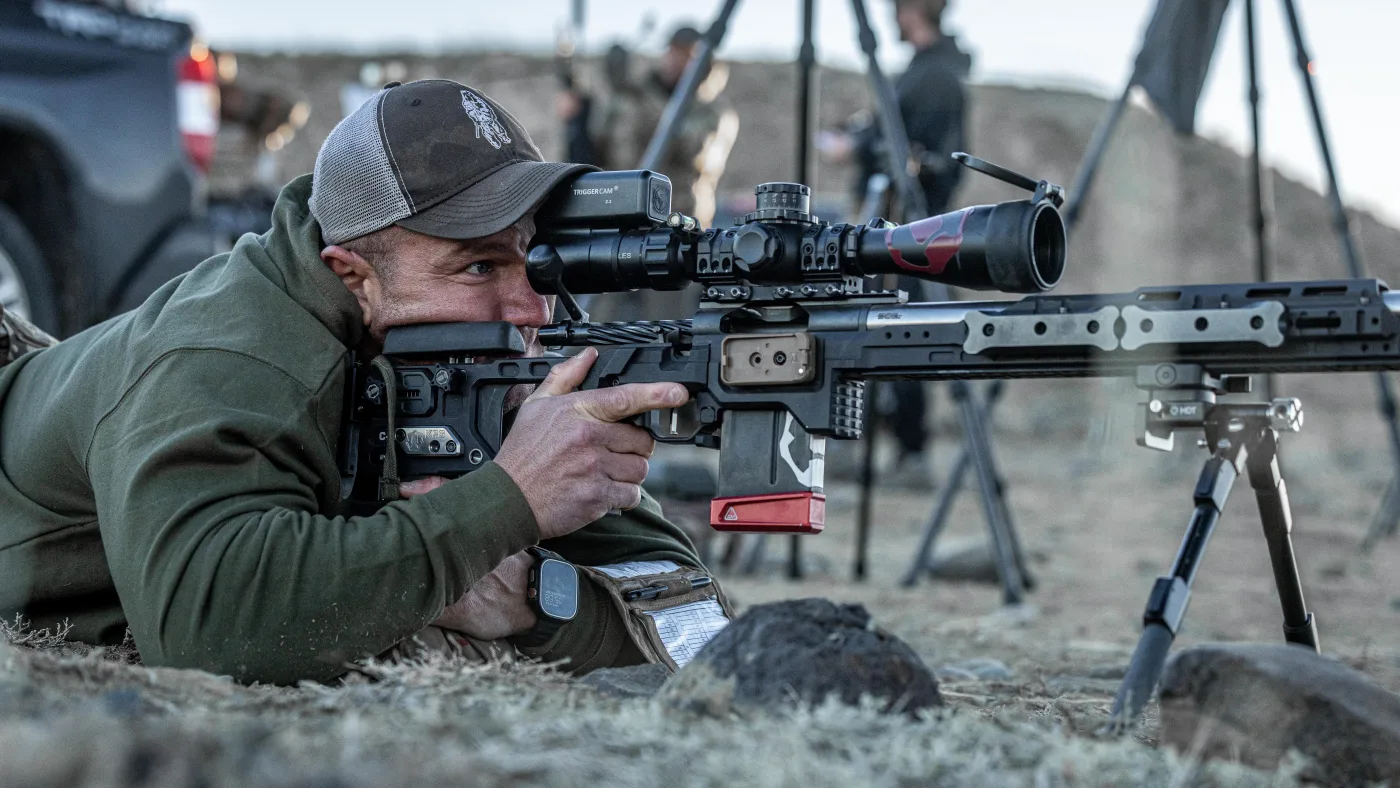
Solo found shooting late.
He grew up in Southern California, and his childhood had nothing to do with guns: skateboarding, BMX, and every team sport on the calendar. By his own count he'd fired a gun exactly once as a kid, and he's not sure that memory is even real. The Marine Corps was always in the back of his head, but it was the movies that put it there, not a rifle range.
He was a good student, a 3.8 he mostly earned before the bell rang, but he was done with classrooms. Two bad knee injuries on the football field cost him years of physical therapy and a lot of time under the bar. He never really left it; the gym is still his therapy. By his senior year he'd signed up for trade school in automotive fabrication. He was a couple months from a completely different life when a buddy walked him into a Marine recruiter's office under false pretenses.
He'd chased an Army Special Forces contract first and walked away from it a week before signing, when they told him it wasn't available straight out of high school. So when the Marine recruiter started talking, Solo was waiting for the catch. Instead he got the truth: you can't contract your way into Recon or the sniper platoon. You earn it. Go infantry, get to the fleet, prove yourself. When the recruiter saw his ASVAB and tried to steer him somewhere else, Solo told him that if he brought up anything but infantry one more time, he'd walk out the door. He signed within three weeks.
Prove yourself
He shipped to MCRD San Diego on July 5, 2005, graduated boot camp as his company's guide, went through the School of Infantry as a squad leader, and made Lance Corporal before he ever hit the fleet. At 1st Battalion, 4th Marines, he spent four years on a Combined Anti-Armor Team and deployed three times: two combat tours to Iraq and a MEU float. He shot expert on the rifle range every single year. He was sure he could shoot.
Quitting was never on the table
In 2010, with reenlistment coming up, he was about to put in a Recon package when his platoon commander asked him on a Friday evening if he wanted to take the scout sniper indoc. It started Monday at 0400. He said yes. Two days in he blew out his IT band and kept going anyway. He found out later that the sniper platoon leadership had already decided to select him by the second day, as long as he didn't quit. That part was never in question.
He joined the platoon in January 2011 and got shipped to Scout Sniper Basic that March, filling a seat two injured Marines couldn't. Three-quarters of the way through, he failed the unknown-distance portion of the course. It was the first thing he'd ever failed in the Marine Corps. He'd shot expert for years, but range estimation and understanding how atmospherics affects elevation settings tripped him up.
He went back in September with a new partner, a shooter who'd passed his own attempt before a broken ankle dropped him from the course. Solo learned fast, and the two of them outshot the whole class.
His fourth and final deployment, a second MEU, took him to Okinawa. It was the first time he deployed as a Scout Sniper, the role he'd fought that hard to earn.
The schoolhouse
After Okinawa he came back and never really left the schoolhouse. He spent the back half of his career teaching the thing that had nearly washed him out, and then training the people who teach it.
- Chief Instructor — Pre-Scout Sniper Course
- Field Skills Instructor — Scout Sniper School, West
- Chief Instructor — Urban & Aerial Sniper Course, 2nd EOTG
- Chief Instructor — Scout Sniper Instructor School, Quantico
- SNCO in Charge — Precision Marksman Course, Quantico
At 2nd EOTG he was the chief instructor for the Urban and Aerial Sniper programs, and he picked up his breacher certification along the way, taught by Jon Bumpus in a small-world twist. Then orders to Quantico put him in as chief instructor at the Scout Sniper Instructor School, the schoolhouse that trains the instructors, while also teaching marksmanship at the MARSOC Advanced Sniper Course. The Marine who failed unknown distance ended up running the schoolhouses that turn out Marine snipers, and the ones that build the people who teach them.
Competition
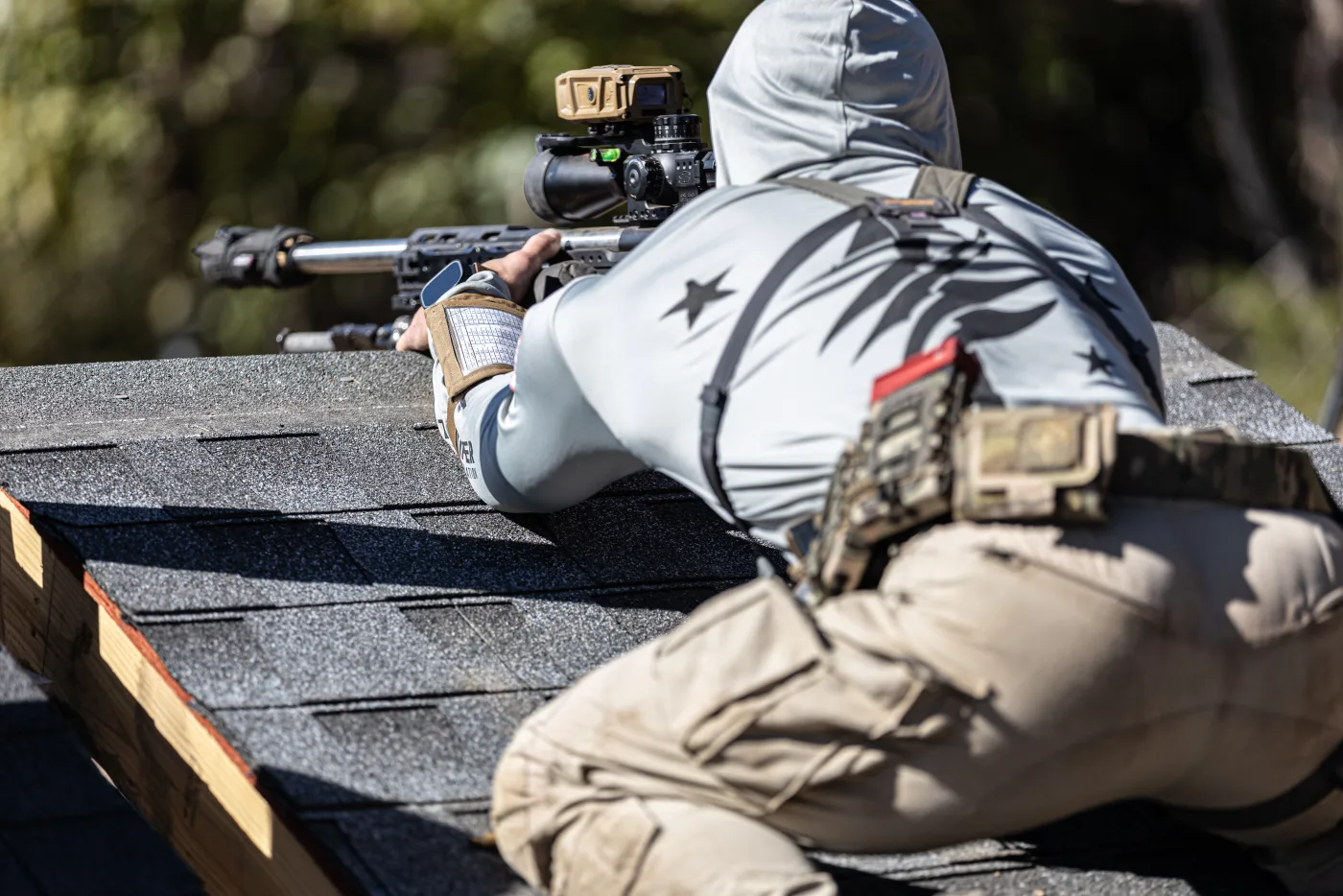
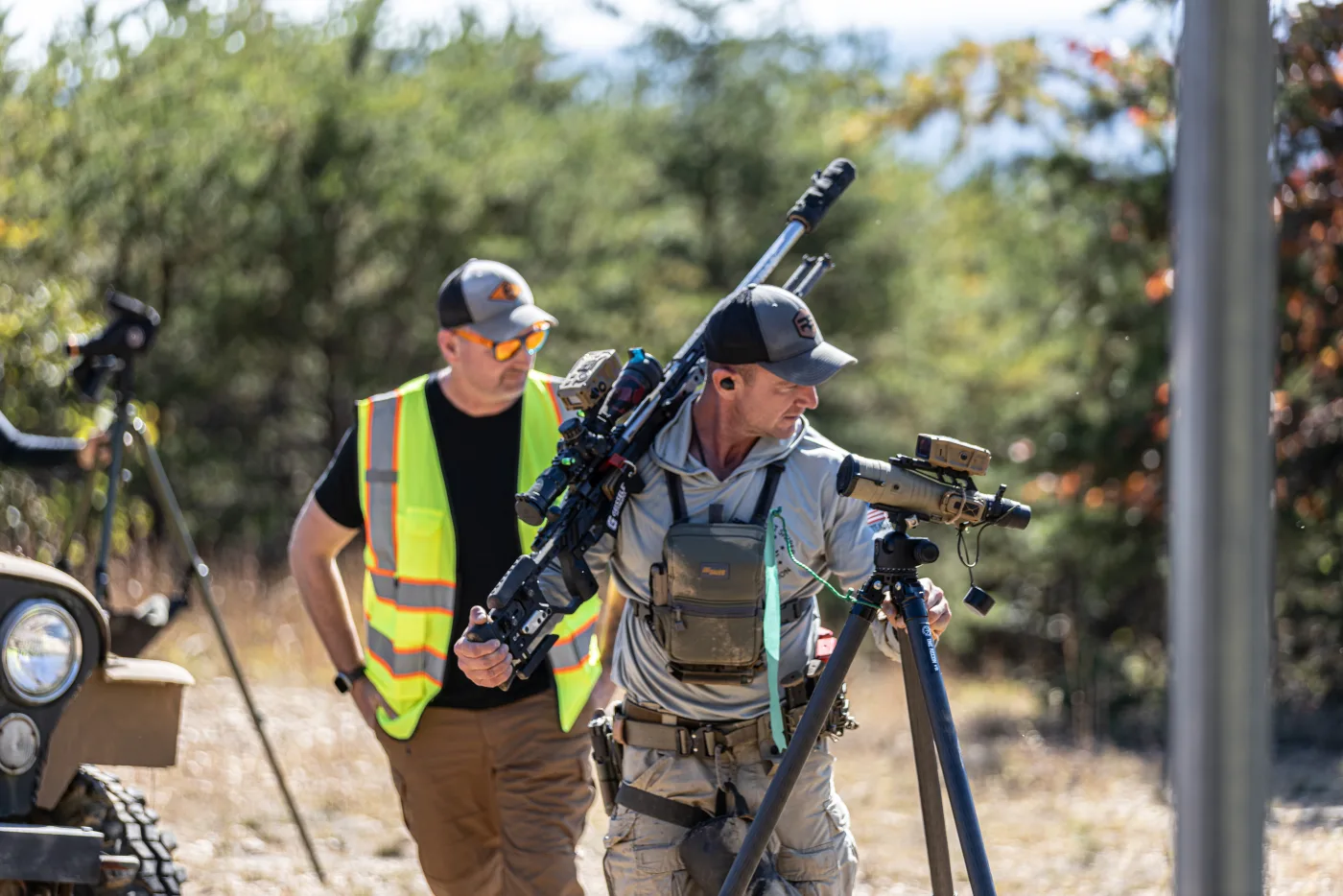
Matt shoots PRS one- and two-day matches, with NRL Hunter on the horizon. Back in 2017 he and Phil Velayo, now The Cadre's CEO, shot the International Sniper Competition together and took 7th overall out of thirty teams from around the world.
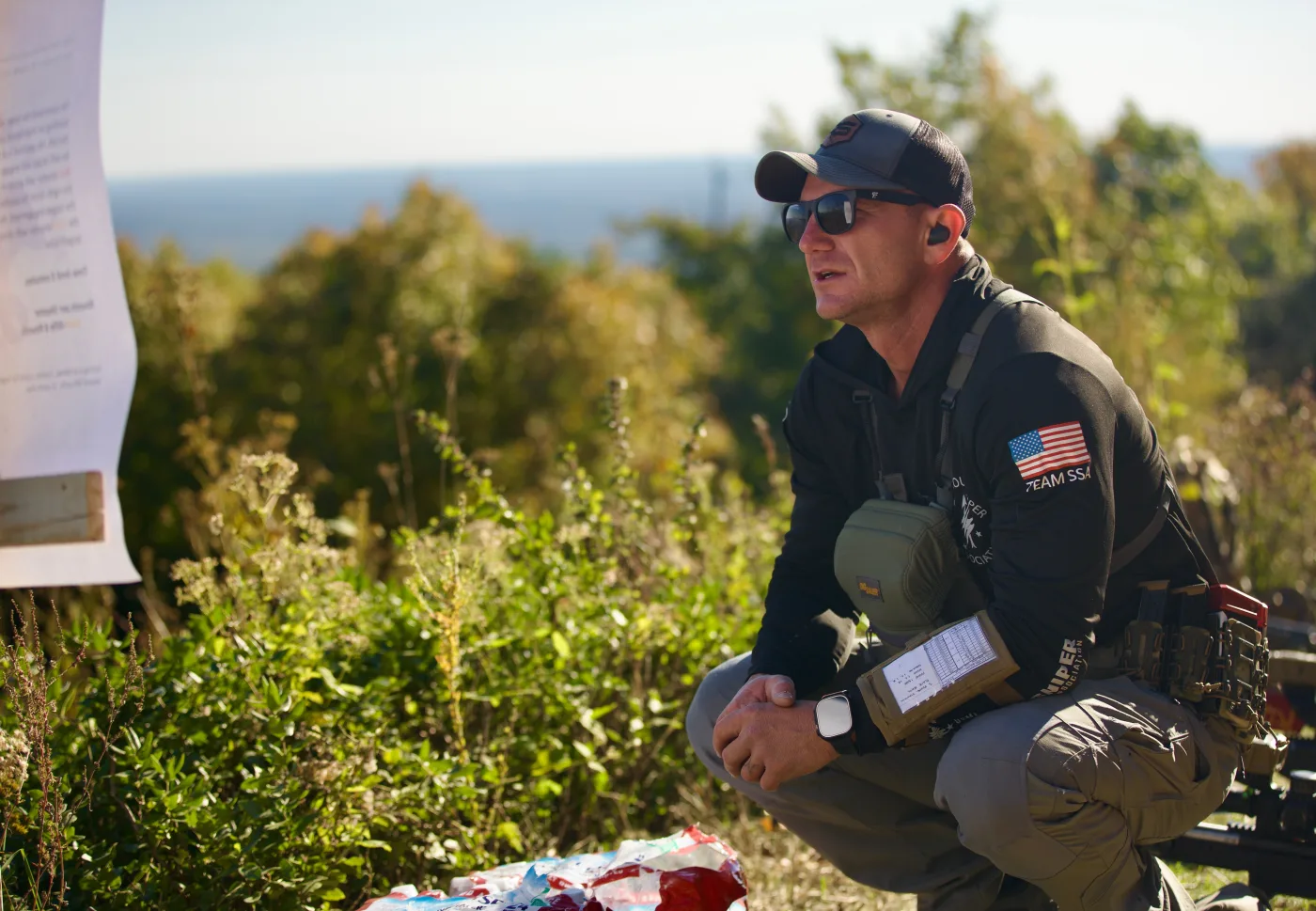
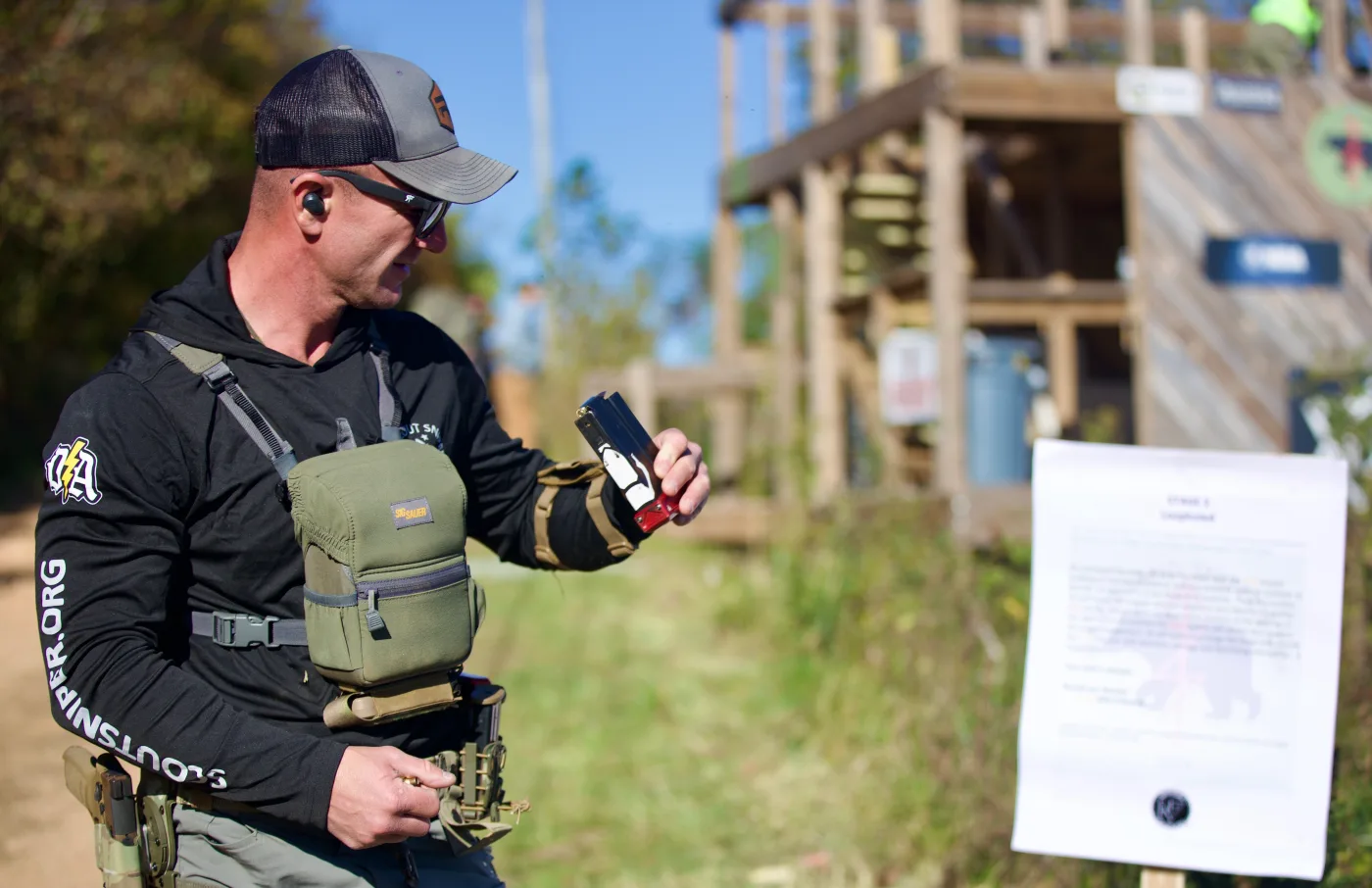
Ask him what makes a good shooter and it has nothing to do with a scorecard. It's the one who can walk off a stage that fell apart, sit down, and put the pieces together. "Now I see where I messed up, and now I see where the problem was, to make sure it doesn't happen again on the next stage." Sometimes you catch it live and adjust on the fly; sometimes you only sort it out after. Either way, that's the skill he's really teaching.
The Cadre
Matt and Phil go back to 1/4, team leaders together. Phil calls him "the perfect half of me," the blunt, no-nonsense counterweight to Phil's more diplomatic way of working. Matt can be abrasive, and he'll be the first to tell you so.
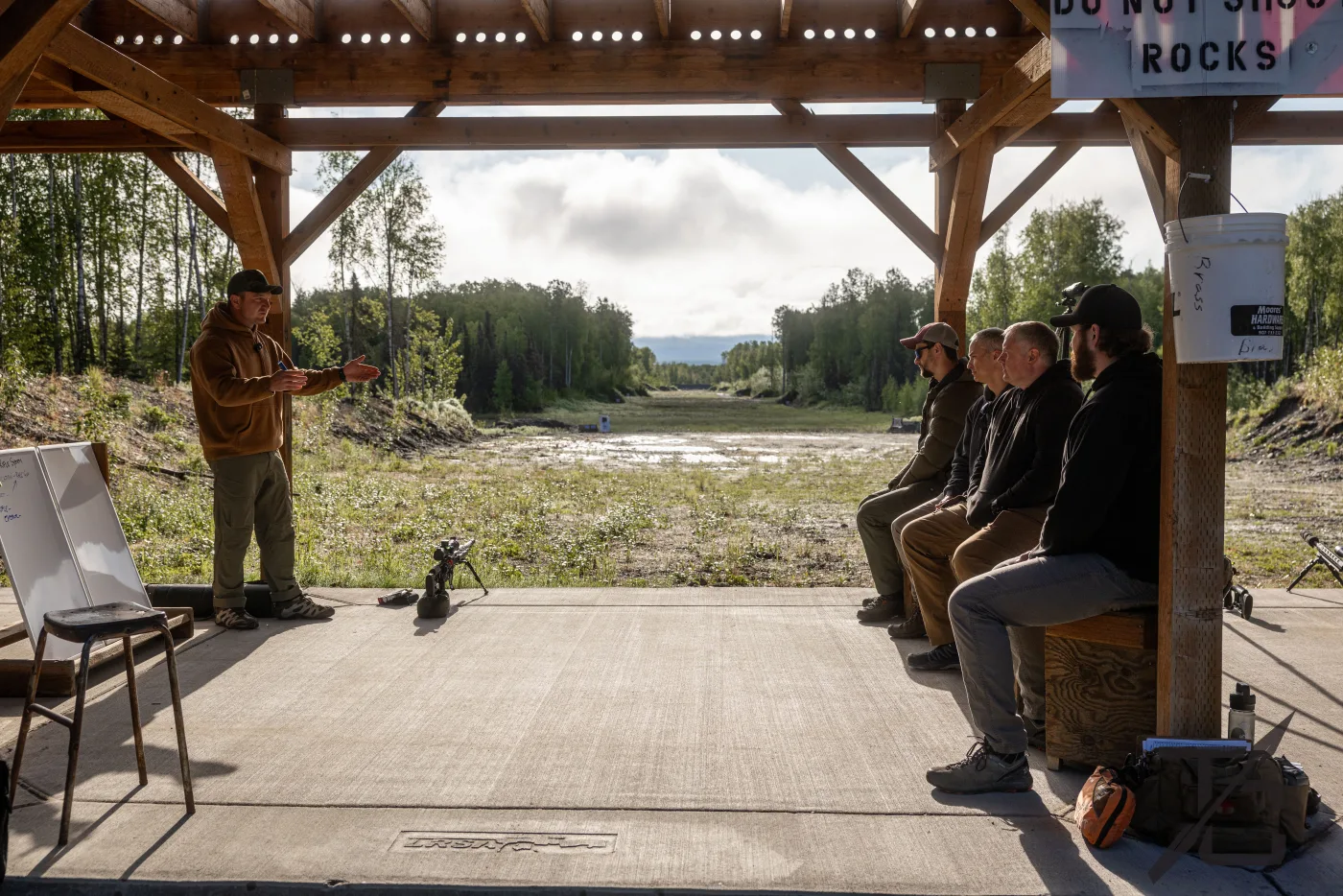
He co-founded The Cadre with Phil and Jon in 2024 while he was still in uniform. The founding instructors came out of the Marine Scout Sniper community, and the regional instructors are people Matt has served with or trained. They all compete. They hold the class size down so every student gets real attention, and they pull each other in when a shooter needs a different set of eyes. Matt runs the North Carolina courses.
How he teaches
Foundation first
Matt's approach starts with the fundamentals and doesn't drift far from them. Build a solid base, and the rest comes as you grow.
Where he separates good shooters from great ones is in the micro-movements, the small things you can't catch in yourself because your eyes are locked on the target. Getting a student to feel what right actually feels like is, to him, the whole multiplier.
His first coaching note for almost anybody is the same: slow down. He watched it for years on qual day: shooters who were dialed in all week falling apart the second someone was watching, rushing to beat the wind on a target they didn't need to rush. "If you get three shots off in ten seconds and you only hit one of them, you just threw two points for no reason. It's a twenty-inch-wide target at three hundred. You don't need to worry about the wind right now."
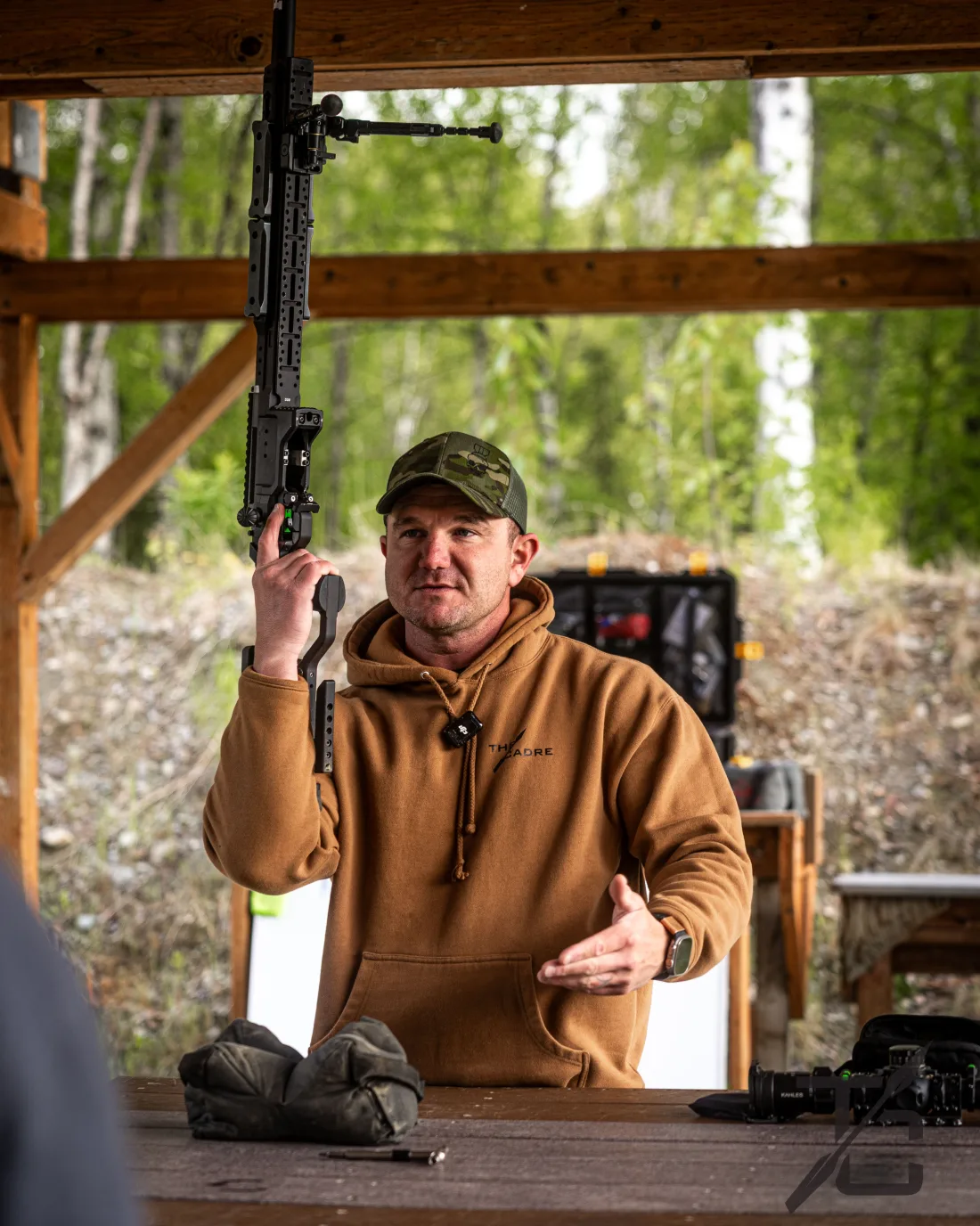
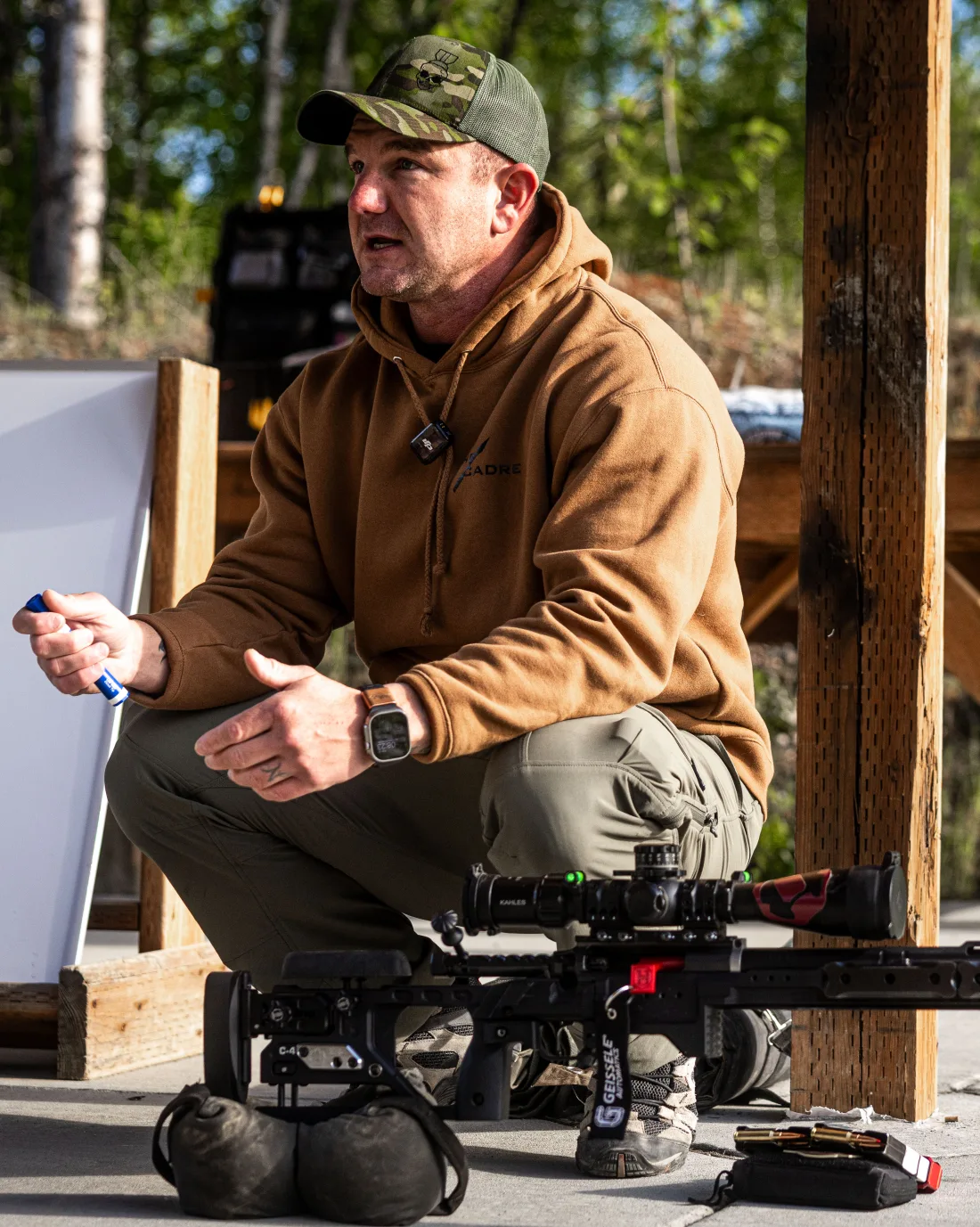
He won't hand a student everything, either. He calls it the seventy-percent solution. "My pet phrase is I need an adult," he says. "You're not going to need to go ask an adult. You're going to be able to go find the information and solve it yourself."
He's patient about when it lands. The Cadre has a phrase for how learning works: saturate, incubate, illuminate. Not everything clicks on the range:
- Some concepts click in thirty minutes.
- Some need to be said out loud one more time.
- Some take years. One didn't land for Matt until nine years after he first heard it.
So he tells students to message him long after the course is over. That's often when the light comes on.
He's calm and patient, but direct. If something's off, you'll know it, and you'll fix it together. The whole method is finding the weak spot, and everybody has one.
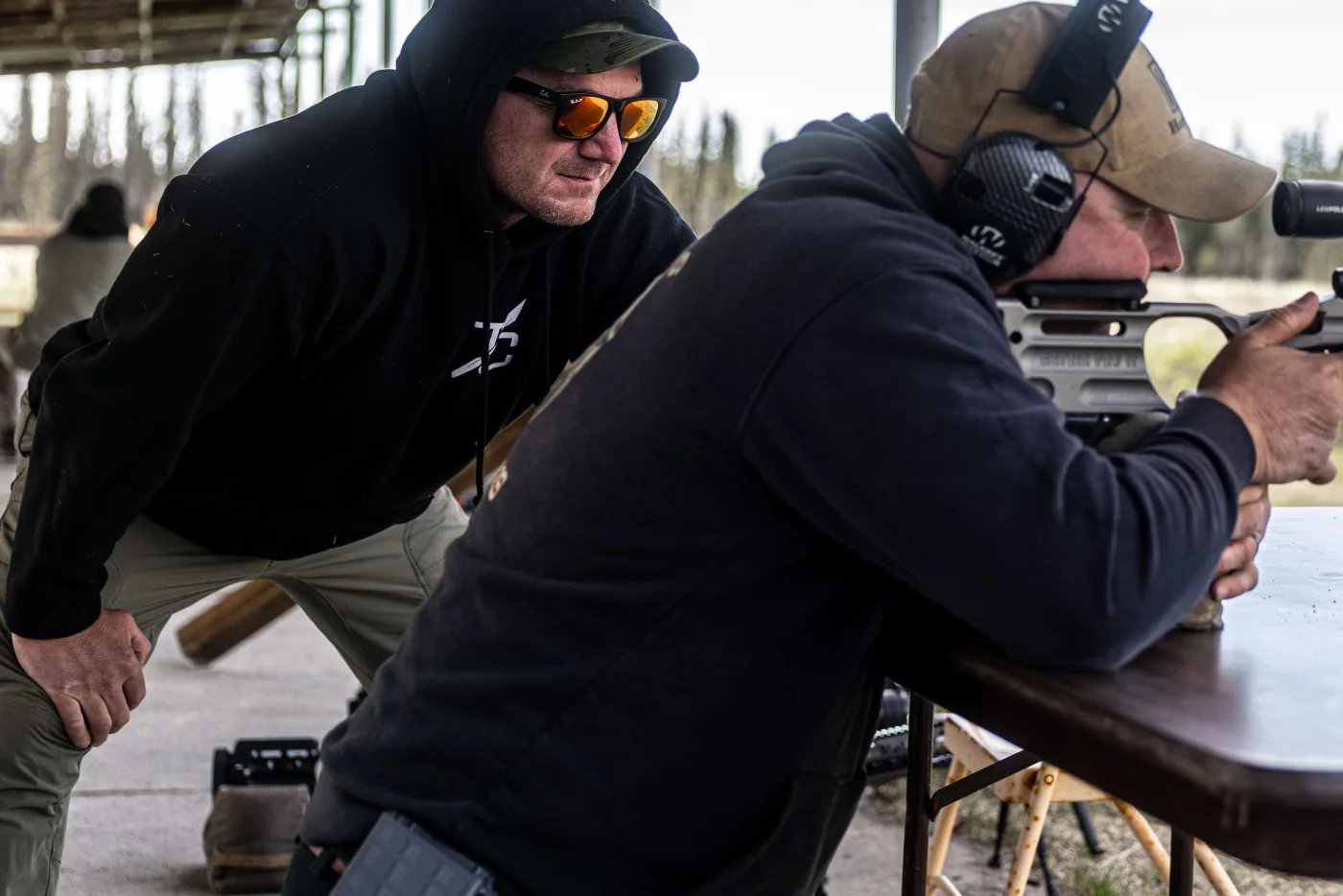
The fastest miss is still a miss, homie. Slow down. What are you doing?
More from Matt