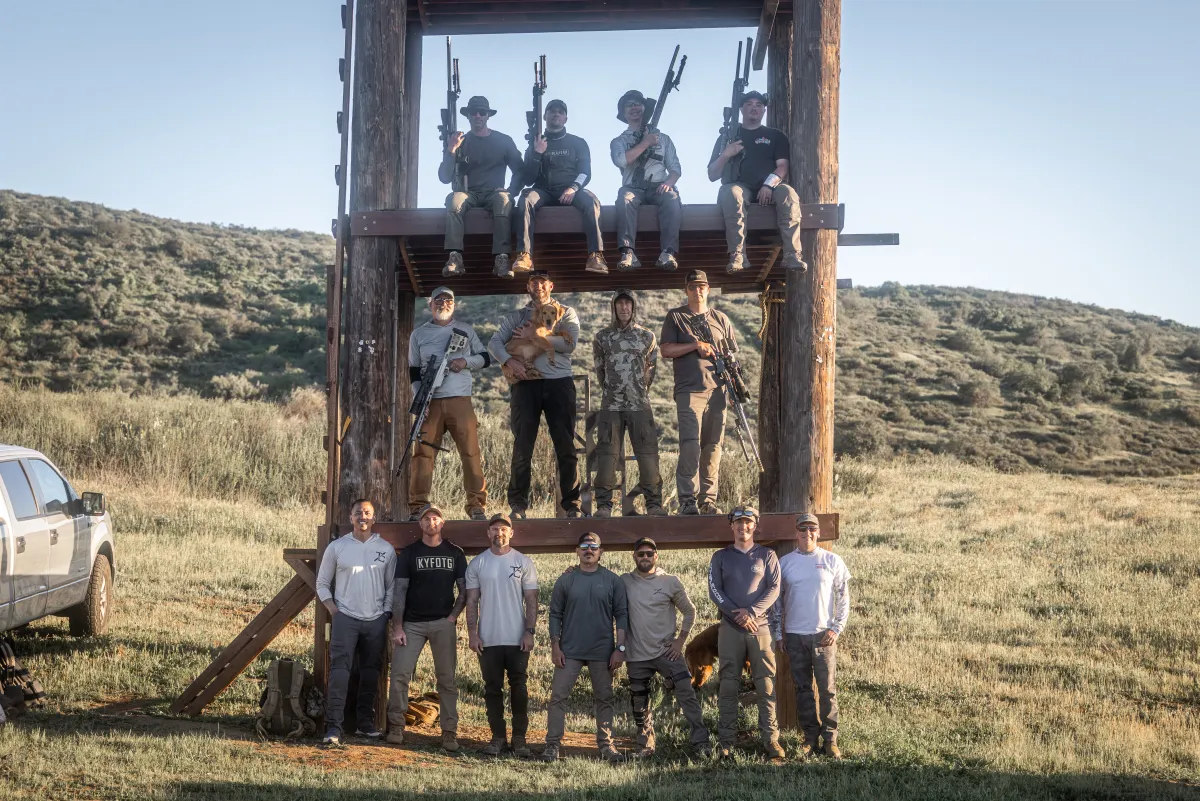
Students shooting positional off tripods during a Cadre Advanced course

Standards / Advanced

Off the dirt. Onto the tripod.

Five events. Twenty points each. The benchmark for a shooter who can rebuild the rifle, prove the data, and shoot from whatever position the ground allows.

View the five events

The next number

Foundation proved you can shoot prone. This proves you can shoot anywhere else.

The Cadre Advanced Standard is the benchmark after a Level 2 or advanced precision rifle course. It is the card the Cadre Advanced course builds to: tripod positions, barricades, and unknown distance out to 700 yards.

Same shape as the Foundation card: five events, 20 points each, scored the same way every time.

The Advanced card

Five events. Off the bipod.

The card starts with a rifle in pieces, moves to the tripod at 100 yards, then takes the tripod and the barricades out to 700.

Event 01 · 20 points

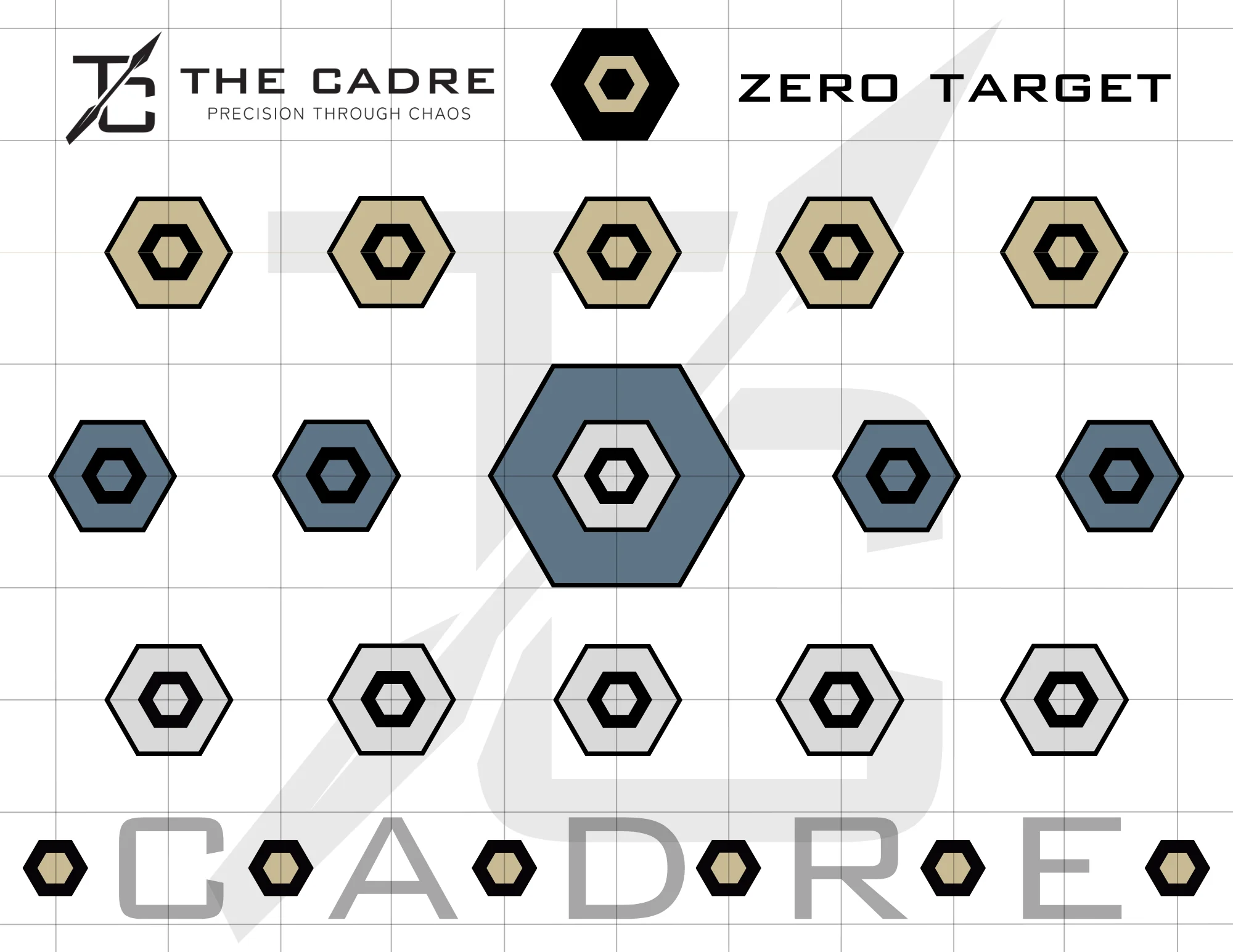
Rifle Zero and Validation

Rebuild the rifle, zero it, and prove the data at 700.

Distance
100 + 700 yards
Rounds
15 zero · 5 validation
Par
30 minutes, all of it
Points
10 + 10
Task
The shooter reassembles a broken-down rifle, zeros it, builds a fresh ballistic profile, and validates the trajectory at 700 yards.
Method
Start with the rifle broken down. The optic stays in its rings, and scope accessories can stay on the optic. Everything else comes apart: barreled action out of the chassis, bipod off, muzzle device off. Reassemble the barreled action into the chassis, then the bipod, muzzle device, and optic. Zero at 100 yards in 15 rounds or fewer while capturing muzzle velocity. Then build the rifle profile in a ballistic solver that has no profile for this rifle, and confirm the trajectory on a 700-yard target in five rounds or fewer.
Purpose
A shooter who cannot rebuild and confirm their own rifle does not own it. This event proves the rifle, the zero, and the data all come from the shooter, not from a profile somebody else built.
End state
The rifle is back together, zeroed to standard, carries a new profile built on measured velocity, and has an impact at 700 yards.

What counts

  • Reassemble the barreled action, chassis, bipod, muzzle device, and optic before the first round.
  • Zero: a three-round group of 0.75 MOA or under, centered within 0.5 MOA of the point of aim.
  • Zero in 15 rounds or fewer for the full 10 points. Each round past 15 costs one point.
  • Capture muzzle velocity during the zero and build the solver profile from it.
  • Validation: one impact on a 2 MOA target at 700 yards in five rounds or fewer for the full 10 points. Each round past five costs one point. Keep sending until you get the impact.
  • The 30-minute par covers reassembly, zero, profile, and validation. Nothing scores after par.
  • Neither half goes below zero.
The Cadre zero target with MOA grid and confirmation aiming points
Zero target Download print PDF

Event 02 · 20 points

Tripod Skills

Four positions, three strings each, all at 100 yards.

Distance
100 yards
Targets
1.5 · 2 · 3 MOA paper
Rounds
20
Points
20
Task
The shooter fires 20 rounds on paper at 100 yards from four tripod positions: standing, high kneeling, low kneeling, and seated.
Method
Each position runs the same three strings, in order: one shot already clipped in, two shots clipping in from rifle in hand, and two shots from a full tripod deployment. Finish all three strings from one position before moving to the next.
Purpose
At 100 yards, wind and gravity are out of the problem. The score measures the tripod position, the setup process, and how fast the shooter gets it right.
End state
The shooter builds a stable tripod position at four heights and delivers precise shots inside every par.

What counts

  • Five shots per position: standing, high kneeling, low kneeling, seated.
  • Every impact earns one point; a miss earns zero.
  • Edge hits and line breaks count as impacts.
  • A shot outside its par earns zero. Each par includes 0.25 seconds of grace.
Coming soon

Tripod Skills targets: 1.5, 2 and 3 MOA at 100 yards.

Official targets Coming soon

Each position: three strings

  1. 01

    Clipped In

    1.5 MOA · 1 shot · 10 sec

    Start with the position built and the rifle clipped into the tripod. On command, deliver one precise shot.

  2. 02

    Clip In

    2 MOA · 2 shots · 20 sec

    The tripod is set at height and the rifle is in hand. On command, clip in and fire two shots.

  3. 03

    Full Tripod Deployment

    3 MOA · 2 shots · 60 sec

    Rifle system and tripod collapsed. On command, deploy the tripod to height, clip in, and fire two shots.

Event 03 · 20 points

Tripod Known Distance

Every benchmark position, under score, at distance.

Distance band
300–700 yards*
Targets
5 steel · 2–3 MOA
Par
Under 5 minutes
Points
20

*Push the course out only as far as your range safely allows.

Task
The shooter engages five known-distance steel targets from set tripod positions.
Method
Start with all gear stowed, tripod included. On command, deploy the tripod and engage targets 1 and 2 standing, 3 and 4 kneeling (high or low), and 5 from low kneeling or seated, near to far, using the Cadre Engagement and Scoring System.
Purpose
Setting the position by target makes the shooter show every benchmark under score. It exposes the weakest position instead of letting the shooter fall back on the comfortable one.
End state
The shooter records a 20-point score from standing, kneeling, and seated with the distances given.

What counts

  • Start with all gear stowed, tripod included.
  • Targets 1 and 2 standing, 3 and 4 kneeling, 5 low kneeling or seated.
  • Target 5 is never the position used for 3 and 4: high kneeling for 3 and 4 allows low kneeling or seated for 5; low kneeling for 3 and 4 means seated for 5.
  • Five targets from 300 to 700 yards, 2 to 3 MOA, set by the shooter or instructor and engaged near to far. Distances are given.
  • Complete the array in under five minutes on the Cadre scoring system. Nothing scores after par.
  • After any impact, fire the required follow-up shot.
  • A clean run uses 10 rounds; the event can require up to 20.
Far Near
Firing line
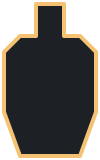
Target type IPSC silhouette Target size 2–3 MOA
Course of fire · targets progress from near to far 1–2 standing → 3–4 kneeling → 5 low kneeling or seated Depth is illustrative. Use steel between 2 and 3 MOA at the distances your range allows.

Event 04 · 20 points

Tripod Unknown Distance

Range it, pick the position, and deliver.

Distance band
300–700 yards, withheld
Targets
5 steel · 2–3 MOA
Par
Under 6 minutes
Points
20
Task
The shooter engages five steel targets at withheld distances, in a randomized order, from tripod positions of their choosing.
Method
Start with all gear stowed. On command, find and range each target, pick a position for it, build the solution, and engage using the Cadre Engagement and Scoring System. Ranging happens on the clock.
Purpose
The position decision belongs to the shooter: which build fits this target at this distance. Two targets per position at most means at least three different positions.
End state
The shooter records a 20-point score while ranging, choosing positions, and solving under one clock.

What counts

  • Range every target on the clock.
  • Engage in a randomized order. On your own, draw the five out of a hat; in class, the instructor sets or randomizes it.
  • The shooter picks the position for each target, but no more than two targets from any one position.
  • Complete the array in under six minutes on the Cadre scoring system. Nothing scores after par.
  • After any impact, fire the required follow-up shot.
Far Near
Firing line
Target type IPSC silhouette Target size 2–3 MOA
Unknown-distance course of fire · targets shown at different depths Example randomized order: 1 → 3 → 5 → 4 → 2 Depth is illustrative. Use steel between 2 and 3 MOA at the distances your range allows.

Event 05 · 20 points

Adaptive Position Unknown Distance

Build on whatever the range gives you.

Distance band
300–700 yards, withheld
Targets
5 steel, one per prop
Par
2 minutes per prop
Points
20
Task
The shooter engages five steel targets at withheld distances, one from each of five barricades or props.
Method
Each prop sits at a height between the benchmark positions and has one target assigned to it, 300 to 700 yards out. With all gear in hand, move to the prop, find the target, range it, build the position, and engage using the Cadre Engagement and Scoring System. Two minutes per prop.
Purpose
Field positions rarely match a benchmark. This event tests whether the process holds when the prop decides the position.
End state
The shooter records a 20-point score from five improvised positions, including one built on rear support.

What counts

  • One target per barricade or prop, five props.
  • Two minutes per prop, starting with all gear in hand. Nothing scores after the two minutes.
  • Recommended props: mid-height standing, low standing, mid kneeling, modified prone, and one that needs rear support, from the tripod or a pack.
  • Range every target on the clock.
  • Engage on the Cadre scoring system. After any impact, fire the required follow-up shot.
Far Near
Firing line
Target type IPSC silhouette Target size 2–3 MOA
Adaptive course of fire · one target per prop Mid-height standing · low standing · mid kneeling · modified prone · rear support Depth is illustrative. Use steel between 2 and 3 MOA at the distances your range allows.

Read this before Events 3–5

The Cadre Engagement and Scoring System

The same system as the Foundation card. Five targets worth four points each. The earlier the first impact, the more it is worth. Any impact must be followed by one more shot.

20 points per event
First-round impact 3 pts
Second-round impact 2 pts
Third-round impact 1 pt
Required follow-up impact +1 pt
No impact in three rounds 0 · F
5 targets × 4 points 20

What changes from Foundation

The position is part of the score

On the Foundation card, prone takes the position out of the problem. Here the position is the problem. A wobbling standing build, a tripod set at the wrong height, or a prop read wrong shows up as a second-round impact or a miss.

Ranging on the clock

In the field, nobody hands you the distance

On both unknown-distance events the shooter ranges on the clock. Finding the target, ranging it, picking the position, and building the solution are all part of the run.

Log your score

Log your Advanced score in the Cadre app

The Cadre app holds the Advanced card next to your Foundation card. Log each event as you shoot it, or see the score your instructor recorded at a class.

Available now

The official setup guide and Advanced scorecard

The four-page PDF covers every event, the setup and gear for each, the engagement and scoring system, and a printable scorecard with a position column for every target.

Run it on your range

Bring the tripod and the tools

Event 1 starts with the rifle in pieces, and Events 2–4 run off the tripod. Pack for both.

Required

  • Precision rifle, bipod, and the tools to break it down
  • Tripod with a rifle clamp or ARCA interface
  • Rear support bag
  • Approximately 100 rounds
  • Two magazines
  • Chronograph
  • Ballistic solver you can build a new profile in
  • Laser rangefinder and timer
  • Advanced scorecard and writing gear

Recommended

  • Arm board for data and notes
  • A second support bag for adaptive positions
  • Barricades or props at in-between heights
Download Zero Target

Shoot the same standard with us

Get off the bipod. Then prove it.

The Advanced course teaches the tripod process, the benchmark and adaptive positions, and the wind work behind the card, then gives you the range time to run it for score.